DPF deep clean vs forced regeneration: which one fits your vehicle?
If your diesel has a DPF warning light on, feels restricted, or has already dropped into limp mode, you will usually end up hearing the same two terms: forced regeneration and DPF deep cleaning. The problem is that many drivers are told one or the other without a clear explanation of what each option actually does.
That creates confusion fast. Some people assume a forced regen is always the first answer. Others jump straight to deep cleaning because the fault feels serious. In reality, the right option depends on how blocked the filter is, what symptoms the vehicle is showing, whether regeneration is still possible, and whether there may be another fault behind the blockage.
This guide breaks the difference down in plain English. It explains when forced regeneration may be the right move, when a deeper clean is more realistic, and why proper diagnostics matter before either route is chosen.
Clear symptom matching
Diagnostics-first approach
Commercially relevant next steps
Contents
- What forced regeneration actually does
- What DPF deep cleaning means
- The main difference between the two
- When forced regeneration may be the better fit
- When deep cleaning may be the better fit
- Warning signs that help point the decision
- Why diagnostics should guide the choice
- Common mistakes to avoid
- What to do next if your DPF is blocked
Quick answer
If the filter is loaded but still suitable for a controlled soot burn, a forced DPF regeneration may be the right step. If the blockage is more severe, the warning light keeps returning, or regeneration is no longer enough, a deeper clean may be the more realistic route. The safest answer comes from proper DPF diagnostics first.
What forced regeneration actually does
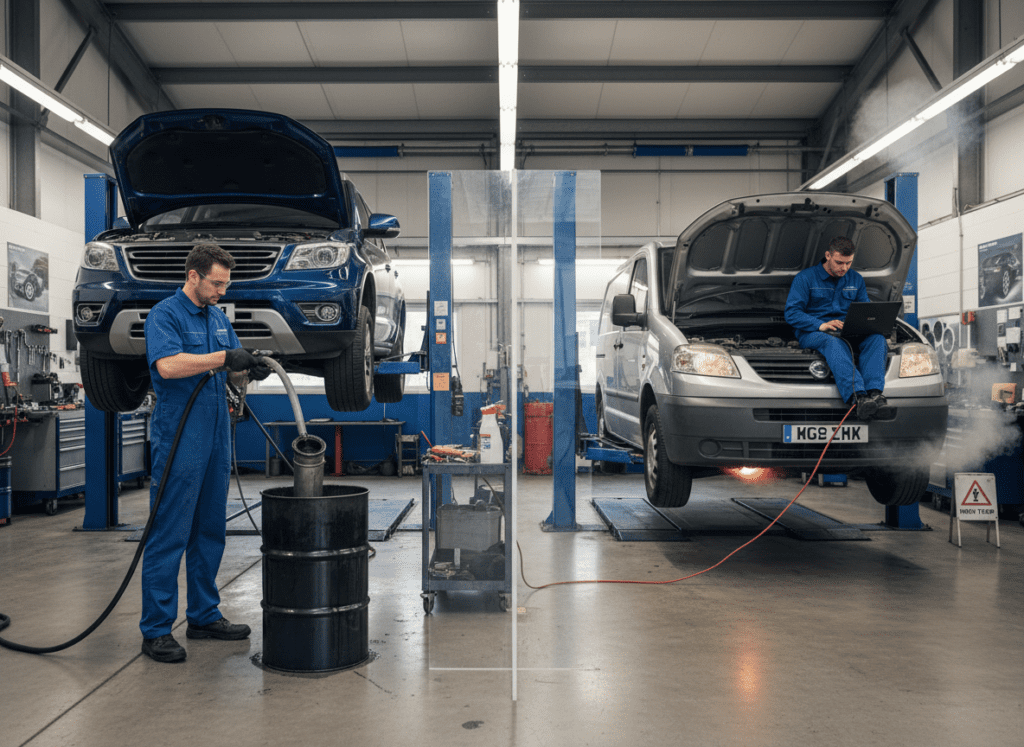
A forced regeneration is a controlled process used to help the diesel particulate filter burn off stored soot. Under normal conditions, many diesel vehicles try to do this automatically while driving. That is the passive or active regeneration process people sometimes hear about. The problem is that daily driving does not always let the car complete it.
Short journeys, slow traffic, repeated stop-start use, and switching the engine off mid-regen can all interfere. Over time, the filter loads up. When that happens, the car may need a workshop-style or specialist-triggered regeneration to clear the soot level under controlled conditions.
That is what forced regeneration is for. It is not magic, and it is not a full reset for every DPF issue. It is a specific tool used when the filter is blocked enough to need help, but still within a condition where regeneration is likely to work safely and effectively.
This makes it a practical option for the right vehicle at the right stage. It is often relevant when the warning light has come on, the filter is loaded, and the car still has a realistic chance of clearing the soot without needing a more involved cleaning route.
What DPF deep cleaning means
DPF deep cleaning is a broader term, but on this site it mainly points towards a stronger cleaning route than forced regeneration alone. That can include the point where the filter needs more than a soot burn and may need a more thorough restore.
In practice, this usually becomes relevant when the blockage is more serious, the vehicle has gone further into restriction, or the fault keeps returning after earlier attempts to sort it. A deep clean is not just about telling the car to burn soot. It is about restoring the filter more thoroughly when simpler recovery options may no longer be enough.
On DPF Clean Specialist, that deeper route is supported by the live cleaning pages, including the mobile DPF cleaning service and the off-car DPF cleaning page. Those services sit further along the journey for drivers whose filter needs more help than a controlled regen can usually provide.
This is why the phrase “deep clean” matters. It signals that the decision is not simply about running a regeneration and hoping for the best. It is about recognising when the filter needs a stronger intervention to restore proper flow and help avoid replacement.
The main difference between the two
The easiest way to separate them is this:
Forced regeneration
Best understood as a controlled soot burn. It is usually considered when the filter is loaded, but not beyond the point where regeneration is likely to work.
DPF deep clean
Best understood as the stronger cleaning route when the filter needs more than just regeneration. It becomes more relevant when blockage is heavier, more stubborn, or repeated.
That difference matters because they solve slightly different stages of the same overall problem. Forced regeneration is usually the lighter intervention. Deep cleaning is the stronger recovery option when the filter needs more help.
The mistake many drivers make is treating them as interchangeable. They are linked, but they are not the same. A car that still fits forced regeneration may not need deep cleaning yet. A car that is heavily blocked or stuck in a repeat-failure cycle may not benefit enough from another regeneration attempt.
When forced regeneration may be the better fit
Forced regeneration is often the better fit when the problem has been caught before the blockage becomes too severe. The warning light may be on. The vehicle may feel slightly flat. Fuel economy may have dropped. The driver may know the car has been doing too many short journeys and has not been getting the right conditions to complete normal regeneration.
In that kind of situation, a forced regen may be enough to bring the soot level back under control and restore normal running. It is especially relevant when there is no clear sign yet that the filter has moved into the more serious stage.
Early to moderate soot loading
The filter is blocked enough to need help, but still in a range where controlled regeneration may work.
Driving pattern is the likely cause
Short trips, interrupted regens, and repeated town driving often sit behind the issue.
No strong sign yet of severe restriction
The car may still drive, even if performance has dropped or the warning light has appeared.
This does not mean forced regeneration is always simple or always suitable. It means there is still a realistic chance that the filter can recover through that route. That is why the forced regeneration service page is such an important commercial step on the site. It serves the customer who is beyond passive regen, but not necessarily at the deep-clean stage yet.
When deep cleaning may be the better fit
Deep cleaning becomes more relevant when the vehicle has moved beyond that earlier window. The warning light may have been ignored for too long. The car may already be in limp mode. Regeneration may have failed before, or the fault may keep coming back after short-term improvements.
At that point, the problem is no longer just that the filter needs a nudge to burn soot. The filter may need a more thorough cleaning route, especially if the restriction has built up over time or earlier steps have not solved the issue properly.
Deep cleaning is more likely when:
- The DPF fault returns after previous regen attempts
- The vehicle is in limp mode or close to it
- The blockage has clearly worsened over time
- The driver wants an alternative before paying for replacement
- The filter needs stronger restoration than a soot burn alone can deliver
Relevant live service routes
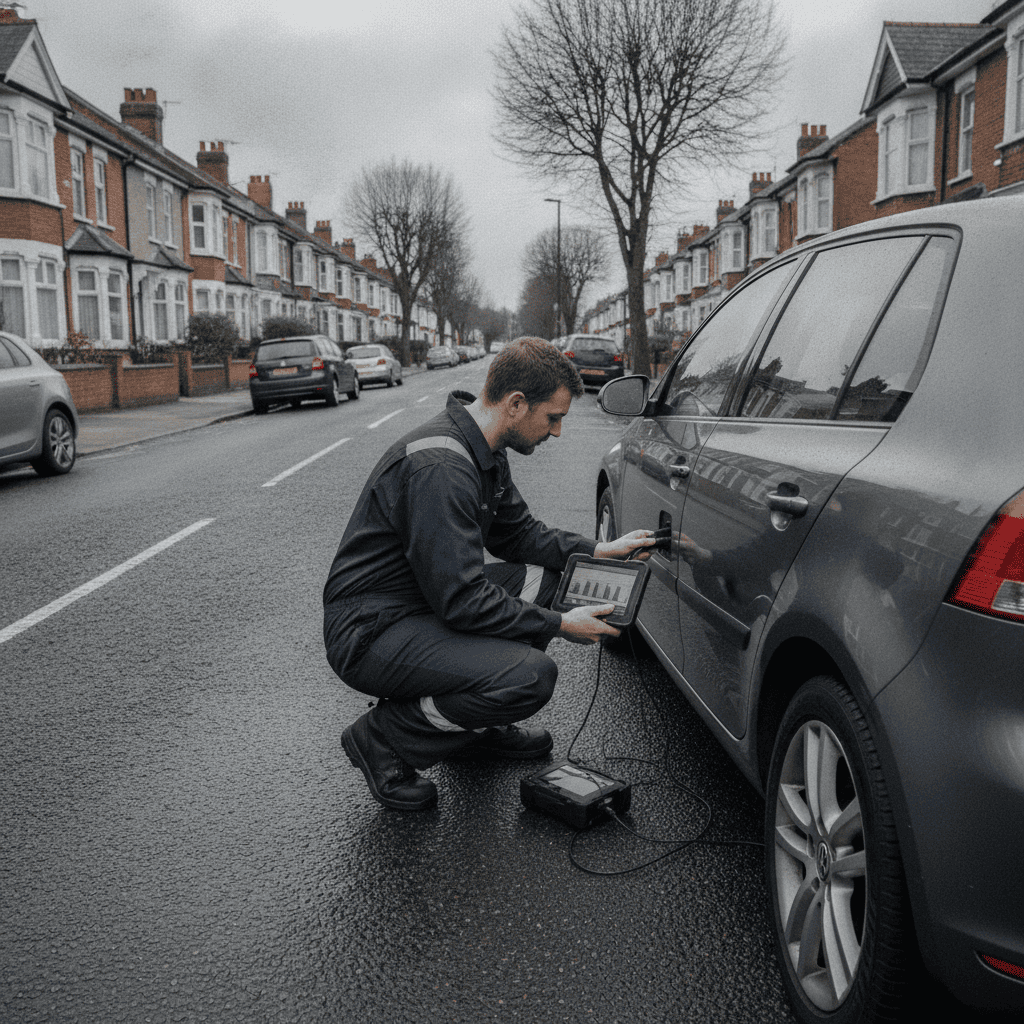
This decision can lead into mobile DPF cleaning or, where the blockage is more serious, off-car DPF cleaning. The exact route depends on the condition of the vehicle and what diagnostics show.
The word “deep” matters here because it reflects a stronger intervention. The customer searching for answers at this stage usually wants to know whether the vehicle is still recoverable without replacing the DPF. That is where deep cleaning becomes commercially and practically important.
Warning signs that help point the decision
You cannot choose the right option from one symptom alone, but a pattern of signs can help point things in the right direction.
| Symptom or situation | What it may suggest | Possible next step |
|---|---|---|
| DPF warning light after lots of short trips | Filter loaded because normal regen has not completed | Forced regeneration may be suitable |
| Loss of power with early restriction | Problem may still be at a stage where controlled regen can help | Diagnostics then possible regen |
| Repeated DPF faults after earlier work | Filter may need stronger cleaning or underlying issue may still exist | Diagnostics then deep-clean decision |
| Limp mode or severe restriction | Blockage may be too serious for simple recovery alone | Deeper cleaning assessment |
| Urgent breakdown-style symptoms | Vehicle may need fast support before a longer-term decision | Emergency call-out |
This is where many drivers realise that the real question is not “what sounds cheaper?” It is “what stage has the problem reached?” That is the question that determines whether forced regeneration is still realistic or whether deeper cleaning is now the better route.
Why diagnostics should guide the choice
This is the most important part of the whole decision. A blocked DPF is not always the whole story. It can also be the result of another issue that has stopped regeneration from working properly or caused soot loading to return too quickly.
That is why DPF Clean Specialist puts diagnostics at the centre of the service journey. A proper check helps confirm how blocked the filter is, whether regeneration is still realistic, and whether there is a deeper issue driving the problem.
Without that step, it is easy to choose the wrong route. A driver may pay for a forced regeneration when the filter already needs more help than that. Another may jump to deep cleaning when the vehicle still fits a simpler and cheaper recovery option. Neither outcome is ideal.
Diagnostics also help protect the customer from guesswork. If the warning light keeps returning, if the car has already had parts changed, or if there are multiple warning lights involved, it becomes even more important to confirm the root cause before deciding between regeneration and cleaning.
Common mistakes to avoid
- Assuming regeneration is always the first answer. It often is not, especially when the blockage has gone too far.
- Assuming deep cleaning is always needed once the warning light appears. Some vehicles are still good candidates for forced regen.
- Ignoring repeated returns of the same fault. If the problem comes back, the next step should be based on proper checks, not hope.
- Letting the issue drag on. DPF problems usually get more expensive and more disruptive when left too long.
- Booking work based only on guesswork or internet advice. Symptoms can look similar across different fault stages.
The overall aim is simple. Match the service to the condition of the vehicle. That protects the customer journey and supports the site’s specialist positioning far better than one-size-fits-all advice.
What to do next if your DPF is blocked
If you are facing a DPF warning light, poor performance, or limp mode, start by thinking about how the vehicle has been used and how long the issue has been going on. Has it mainly been doing short trips? Has the warning light only just appeared? Or has the problem been hanging around, coming back, and getting worse?
If it looks like the issue has been caught relatively early, a forced regeneration may still be the right route. If the symptoms are more serious, the fault keeps returning, or the vehicle already feels heavily restricted, a deeper clean may be the more realistic answer.
Still, the smartest next step is not to self-diagnose from a checklist alone. It is to book the right diagnostic-led service and let the vehicle be assessed properly. That way, you know whether regeneration is still suitable, whether cleaning is the stronger fit, or whether urgent support is needed before either option is carried out.
Need help deciding between regeneration and cleaning?
If your diesel is showing blocked DPF symptoms, warning lights, or limp mode, do not guess which service fits. DPF Clean Specialist can assess the vehicle, confirm the likely cause, and point you towards the right next step across diagnostics, regeneration, cleaning, and urgent mobile support.
Frequently asked questions
What is the main difference between forced regeneration and a DPF deep clean?
Forced regeneration is mainly a controlled soot burn used when the filter is loaded but still suitable for that process. A deep clean is the stronger option when the blockage needs more than regeneration alone.
How do I know if my DPF is too blocked for regeneration?
Repeated fault returns, limp mode, severe restriction, or earlier failed regen attempts can all suggest the filter may need a deeper clean instead. Diagnostics confirm this more reliably than symptoms alone.
Can a forced regeneration solve every blocked DPF problem?
No. It can help in the right circumstances, but it is not the answer for every stage of blockage or every underlying diesel fault.
Should I book diagnostics before deciding between the two?
Yes. Diagnostics help show how blocked the filter is, whether regeneration is still suitable, and whether there may be another issue behind the DPF fault.
What if my vehicle needs urgent help before any longer decision?
If the vehicle is heavily restricted or needs fast attention, the emergency DPF call-out route may be the best first step before deciding on regeneration or deep cleaning.