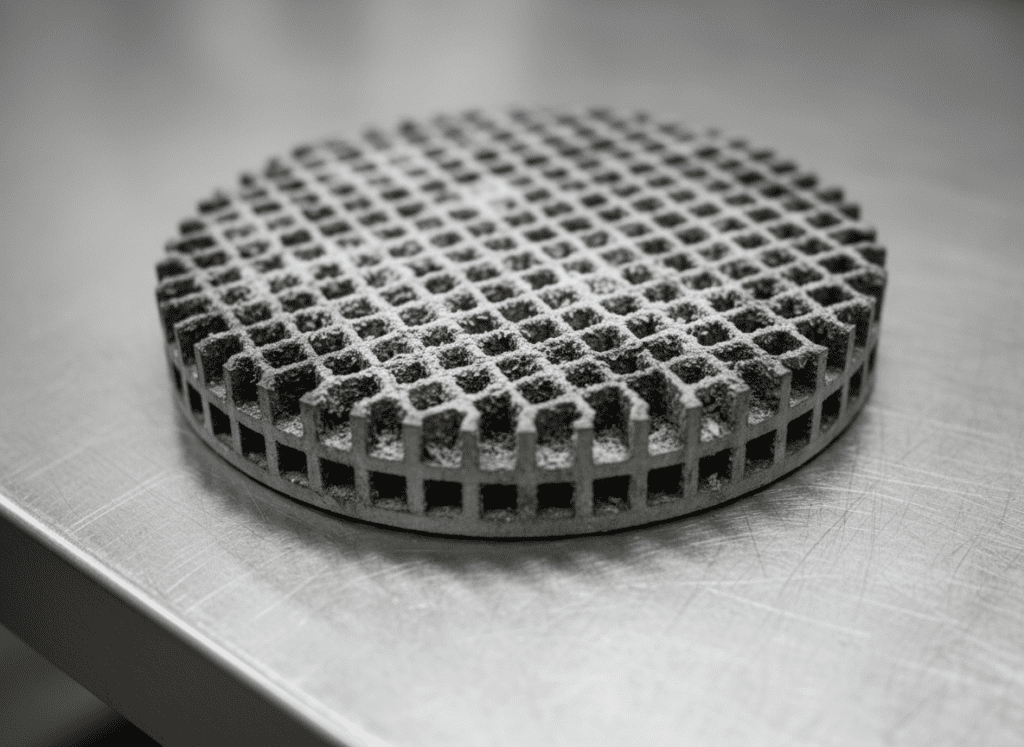
Most DPF conversations focus on soot — the carbon particles that accumulate during short journeys and incomplete regeneration cycles. But there is a second type of residue that builds up in every diesel particulate filter over time, behaves very differently, and requires a completely different approach to remove. Understanding the difference between soot and ash is essential if you want to make sense of what is actually happening inside your DPF.
In this guide
Not sure whether soot or ash is causing your DPF problem?
A full diagnostic assessment checks differential pressure readings and filter condition before recommending any cleaning or service option. Free of charge, at your location.
What is soot and how does it accumulate
Soot is carbon particulate matter — the fine black particles produced when diesel fuel does not combust completely in the engine. In a healthy engine, soot output is relatively low, but it is never zero. The DPF is designed to capture these particles and stop them from being released into the atmosphere.
Under normal driving conditions, the filter clears itself through regeneration — a process where exhaust temperatures rise high enough (typically above 550 to 600 degrees Celsius) to oxidise the accumulated soot and convert it to carbon dioxide and water vapour. This passive regeneration happens automatically on sustained motorway or dual carriageway journeys without any driver input.
Problems arise when regeneration cannot complete. The most common cause is driving pattern: short urban journeys do not generate the sustained exhaust temperatures needed for passive regen to work. Soot accumulates faster than it clears, and the filter becomes progressively more restricted. For more detail on why driving pattern matters, see our guide on why short journeys block your DPF.
Soot blockage is also accelerated by engine faults. A stuck EGR valve, worn injectors, or poor combustion can dramatically increase the soot output per engine cycle, overwhelming the filter’s ability to manage the loading through normal regen cycles.
What is ash and where it comes from
Ash is a fundamentally different substance from soot, and understanding this distinction is the key to understanding why high-mileage DPF problems are often harder to resolve than soot blockages in younger vehicles.
Engine oil contains a range of additives — detergents, anti-wear agents, antioxidants — that serve important functions in protecting the engine. At the high temperatures and pressures of combustion, small amounts of engine oil burn in the cylinder alongside the fuel. Unlike diesel, the metallic compounds and mineral additives in engine oil cannot be fully oxidised during combustion. They pass through the exhaust system and are captured by the DPF, where they accumulate as a grey-white powdery residue: ash.
Sources of ash in the DPF
The primary source of ash is normal engine oil consumption — a small but continuous loss of oil into the combustion process that all engines experience, even healthy ones. This is unavoidable; it is simply how diesel engines work. The rate of ash accumulation depends on how much oil the engine consumes and what type of oil is used.
Secondary sources include lubricant from the turbocharger (which also operates at temperatures where oil can partially combust and pass through the exhaust) and coolant contamination in engines with head gasket issues, though the latter is less common.
Using the incorrect engine oil — particularly a standard fully synthetic oil instead of the low-SAPS specification required for vehicles with DPFs — accelerates ash accumulation significantly. Low-SAPS oils are specifically formulated to minimise the ash residue produced when the oil burns. Using a high-SAPS oil in a vehicle with a DPF can shorten the filter’s effective service life considerably.
The key differences between soot and ash
| Property | Soot | Ash |
|---|---|---|
| Origin | Incomplete combustion of diesel fuel | Combustion of engine oil additives |
| Composition | Carbon particles | Metallic compounds, mineral residues |
| Appearance | Fine black carbon deposits | Grey-white powdery residue |
| Where it sits | Throughout the filter channels | Packs into the rear of the filter channels |
| Can regeneration remove it? | Yes — soot oxidises and burns off at regen temperatures | No — ash cannot be oxidised and is permanent until physically removed |
| What removes it | Passive or forced regeneration; professional cleaning | Off-car deep cleaning only |
| Primary cause | Short journeys, failed regeneration, engine soot overproduction | Normal oil consumption over high mileage; incorrect oil spec |
| Builds up over | Weeks to months depending on driving pattern | Years — gradual and unavoidable |
The critical practical difference is what regeneration can and cannot do. Soot burns. Ash does not. A forced regeneration service — where diagnostic equipment runs a controlled regen cycle at the correct temperature — will clear a soot-blocked filter effectively. The same service will make no useful difference to an ash-loaded filter, because no amount of heat will oxidise the metallic ash compounds that have settled in the substrate channels.
How the ECU handles soot and ash differently
The ECU monitors DPF loading primarily through the differential pressure sensor — comparing the exhaust pressure on the inlet and outlet sides of the filter. As the filter fills up (whether with soot, ash, or both), back pressure increases and the differential reading rises.
The ECU uses this pressure data alongside a software model to estimate soot loading. The model assumes that regeneration will periodically clear the filter, and it calculates whether the loading pattern matches expectations. What the ECU cannot directly distinguish is how much of the restriction comes from soot and how much comes from ash — because both show up as increased differential pressure.
This creates a practical problem. A high-mileage filter with significant ash loading will show a persistently elevated differential pressure even after a successful regeneration cycle, because the ash has not been removed. The ECU sees the high pressure, concludes the filter is still loaded with soot, and may attempt further regeneration cycles that have no effect on the actual cause. Eventually the system may throw a fault code such as P244A (particulate filter restriction — ash accumulation) or P244B (differential pressure too high), indicating that the restriction is not resolving through regeneration as expected.
Important distinction: On a live diagnostic read, a soot-blocked filter and an ash-loaded filter can show very similar differential pressure numbers. The difference becomes apparent when you compare the pressure reading after a successful regeneration cycle: soot loading drops significantly after a good regen; ash loading does not. This comparison is one of the most reliable indicators of which problem is dominant.
How to tell whether soot or ash is causing your DPF problem
Several factors point toward ash loading as the primary cause rather than soot blockage:
- High mileage — Ash accumulates continuously over time. A vehicle with over 80,000 to 100,000 miles on the original DPF is far more likely to be dealing with significant ash loading than a lower-mileage vehicle.
- Persistent high differential pressure after successful regeneration — If a full forced regeneration has been completed and the pressure reading has not dropped significantly, soot is not the dominant restriction. Ash is the more likely cause.
- Fault code P244A — The ECU has specifically flagged ash accumulation as the cause of the restriction.
- Repeated DPF faults on a vehicle with consistent driving patterns and a healthy engine — If a vehicle’s engine and driving pattern have not changed but the DPF is blocking more frequently than it used to, increasing ash loading may be reducing the filter’s effective capacity and making it harder for regeneration to maintain normal operation.
- Normal soot loading estimate on live diagnostic data despite a high pressure reading — If the ECU’s soot loading calculation shows a low or moderate figure but the pressure reading is high, the restriction is likely coming from ash rather than current soot accumulation.
In practice, most real-world DPF problems involve a combination of both soot and ash — older filters with significant ash loading will also have soot on top of it, making diagnosis more complex. For a reliable assessment of what is actually causing the restriction, live diagnostic data comparing pressure readings before and after a forced regeneration cycle provides the most useful picture.
Cleaning options: what works for each
The cleaning approach that is appropriate depends on which type of loading is dominant in the filter.
For soot-dominant blockage
If the filter is primarily blocked with soot and the substrate is physically intact, the options range from least to most intensive:
- Passive regeneration — Only effective when loading is at an early stage and driving conditions allow sustained high-speed running. Once the car is showing a warning light or has entered limp mode, passive regen is unlikely to clear the filter on its own.
- Forced regeneration — Uses diagnostic equipment to command a controlled regen cycle at the correct temperature and duration. Effective for moderate soot loading where the substrate is intact. A forced DPF regeneration service is the right starting point for many soot-blocked filters.
- Professional mobile cleaning — Where soot loading is heavy or regeneration alone has not been sufficient, professional cleaning removes deposits that regen cannot clear. Mobile DPF cleaning is available at your location across the West Midlands.
For ash-dominant blockage
Ash requires physical removal — it cannot be burned out. The appropriate service is an off-car deep clean, where the filter is removed from the vehicle and cleaned using specialist equipment designed to flush the ash deposits from the substrate channels.
This process is more involved than on-vehicle soot cleaning, but it is still significantly less expensive than DPF replacement and restores the filter’s flow characteristics far more effectively than any regeneration-based approach. For a high-mileage filter in otherwise good structural condition, deep cleaning to remove ash is almost always preferable to replacement.
Worth knowing: If a mechanic recommends replacing your DPF on a high-mileage vehicle without first assessing whether ash loading is the primary cause — or without confirming the substrate is physically damaged — it is worth getting a second opinion. Ash loading is a cleanable condition in most cases, not a replacement scenario.
DPF Clean Specialist covers the full range of DPF services across the West Midlands, including professional diagnostics to confirm whether soot, ash, or a combination is causing the restriction. A free diagnostic assessment provides the information needed to choose the right service before committing to any work.
Not sure whether you need cleaning, regen, or something more?
We assess the actual cause before recommending anything. Live diagnostic data, not just a code read. Free of charge, mobile service across the West Midlands.
Frequently asked questions
At what mileage does ash loading typically become a problem?
There is no universal threshold — it depends on engine oil consumption rate, oil specification, and engine design. As a general guide, filters on vehicles with over 80,000 to 100,000 miles that have only used standard engine oil are likely to have accumulated meaningful ash loading. Vehicles that have consistently used the correct low-SAPS oil will accumulate ash more slowly.
Will forced regeneration help with ash loading?
No. Ash cannot be oxidised at regeneration temperatures. Forced regeneration clears soot but has no effect on ash deposits. If ash is the dominant restriction, running repeated regen cycles will not resolve the fault code or restore normal filter performance.
Can I tell from a fault code alone whether the problem is soot or ash?
Not reliably. P244A specifically flags ash accumulation, which is a strong indicator. P244B indicates high differential pressure but does not distinguish the cause. P2463 points to soot accumulation. In practice, the most reliable way to distinguish between the two is to compare live pressure readings before and after a forced regeneration cycle — if pressure drops significantly, soot was dominant; if it does not, ash is the more likely cause.
Does using the correct oil completely prevent ash accumulation?
No — ash accumulation is unavoidable because all engines consume some oil. Using the correct low-SAPS oil significantly slows the rate of accumulation, but ash will still build up over time. The correct oil extends the interval before ash becomes a problem; it does not eliminate it.
Is a DPF with significant ash loading worth cleaning, or should it be replaced?
In most cases, deep cleaning to remove ash is the better option — it is significantly cheaper than replacement and restores the filter’s function effectively when the substrate is structurally intact. Replacement is the right answer when the substrate is physically cracked or damaged, not simply because the filter has ash loading. A proper diagnostic assessment, including a physical check of the substrate condition, should always precede a replacement recommendation.