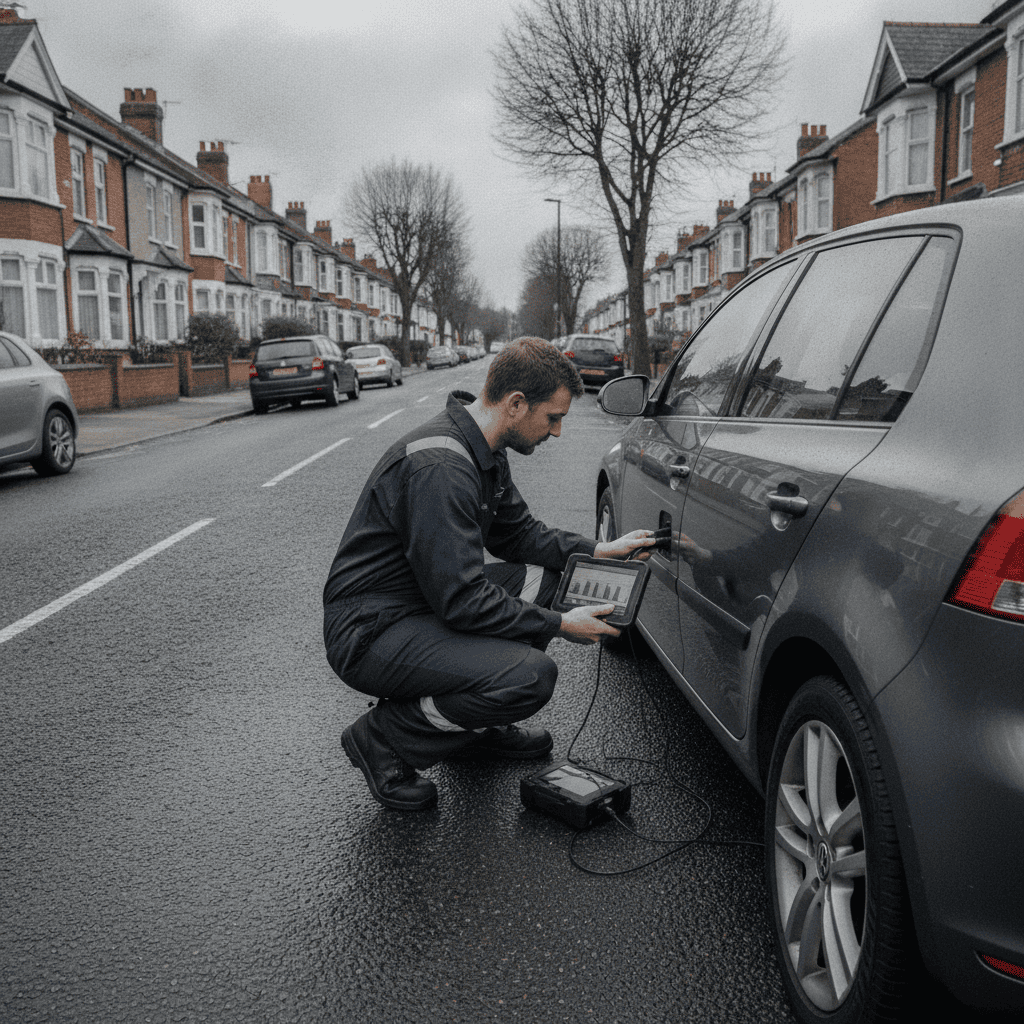
Car in Limp Mode – Could Your DPF Be the Cause?
If your car has suddenly lost power and feels restricted, there is a strong chance it has gone into limp mode. This is the vehicle protecting itself from damage. One of the most common causes of limp mode in diesel vehicles is a blocked DPF.
It often catches drivers off guard. One minute the car feels normal. The next, it struggles to accelerate, feels sluggish, and may not go past certain speeds.
What Is Limp Mode?
Limp mode is a safety feature built into your car. When the system detects a serious issue, it limits engine power to prevent further damage.
This usually means:
- Reduced acceleration
- Limited speed
- Poor throttle response
- Warning lights on the dashboard
The car is still driveable in many cases, but only to a limited extent.
—How the DPF Causes Limp Mode
Your DPF controls exhaust flow. When it becomes blocked, pressure builds up in the system.
The engine cannot breathe properly.
When this happens, the vehicle will often trigger limp mode to protect components like:
- The turbocharger
- The engine itself
- The exhaust system
This is why a blocked DPF is one of the most common causes of sudden power loss in diesel vehicles.
—Common Signs Your DPF Is Causing Limp Mode
If your DPF is the cause, you will often notice a combination of symptoms:
- DPF warning light on
- Engine management light
- Loss of power when accelerating
- Car struggling uphill
- Higher fuel consumption
- Fans running more often than normal
If you have more than one of these at the same time, the DPF is a likely cause.
—Other Causes of Limp Mode
While the DPF is a common cause, it is not the only one.
Limp mode can also be triggered by:
- Turbo issues
- Boost leaks
- Fuel system faults
- Sensor failures
This is why guessing is risky.
A proper check is needed to confirm the exact cause. You can arrange a mobile check here: Mobile DPF Diagnostics
—What To Do If Your Car Goes Into Limp Mode
Step 1 – Do not push the car
Driving aggressively can make the issue worse. The car has reduced power for a reason.
Step 2 – Avoid long journeys
If possible, limit driving until the issue is checked.
Step 3 – Get diagnostics
This will confirm whether the DPF is blocked or if another issue is present.
—Can a Regeneration Fix Limp Mode?
In some cases, yes.
If the blockage is not too severe, a forced DPF regeneration may clear the filter and restore power.
However, this depends on:
- How blocked the DPF is
- Whether there are other faults present
If regeneration fails, further action is needed.
—When Cleaning Is Needed
If the DPF is too blocked, regeneration will not work.
At this stage, a mobile DPF cleaning service is the next step.
This removes the soot properly and restores exhaust flow.
It is often far more cost-effective than replacing the DPF.
—What Happens If You Ignore Limp Mode?
If you continue driving without fixing the issue, you risk:
- Complete DPF blockage
- Further engine damage
- More expensive repairs
- Vehicle not starting in some cases
When To Get Help
If your car is in limp mode, do not wait for it to fix itself.
The sooner you get it checked, the easier it is to resolve.
If the issue feels urgent, you can use the emergency call-out service.
—Get Your Car Back to Full Power
If your car has gone into limp mode, the most important step is to find the cause quickly.
This avoids unnecessary repairs and gets you back on the road faster.
Contact Us to Book