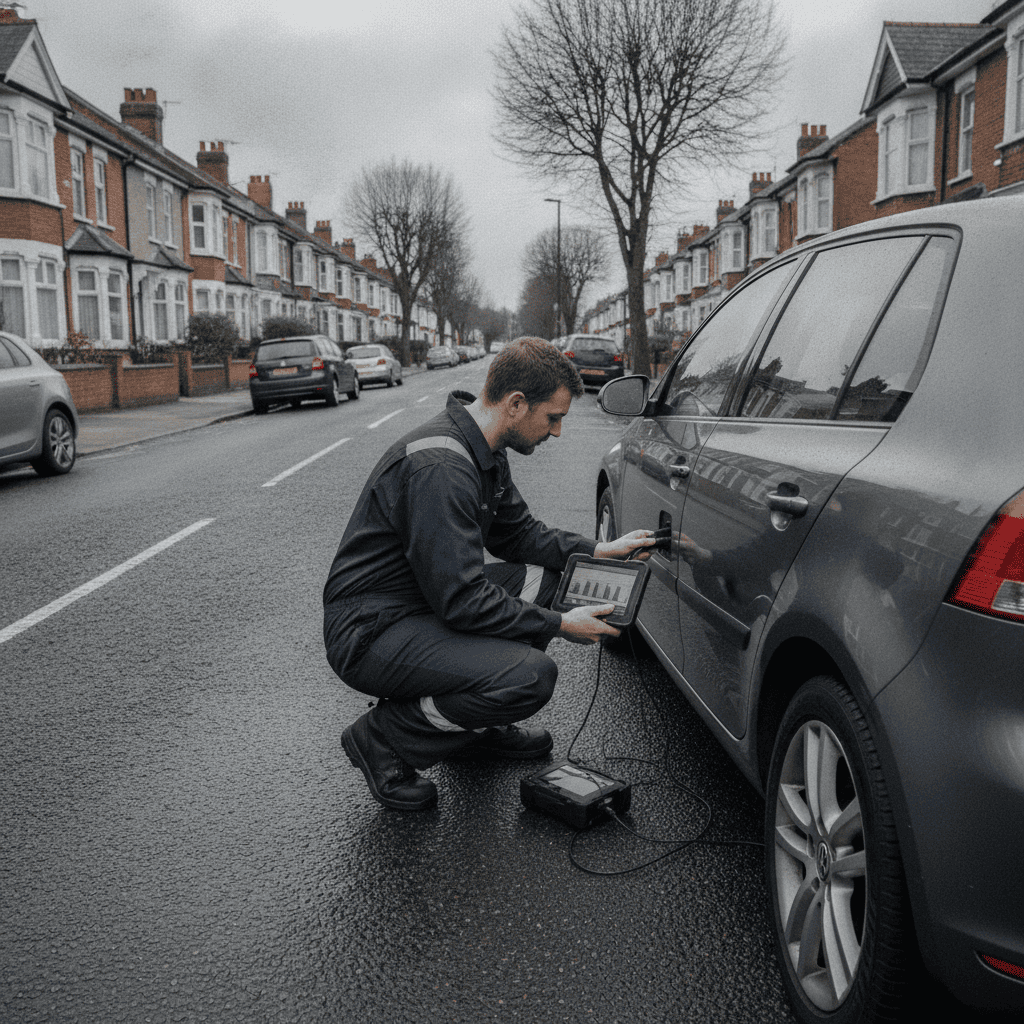
DPF cleaning costs vary considerably depending on the vehicle, the method used, and the condition of the filter. Understanding what affects the price helps you evaluate quotes properly and avoid paying for more — or less — than the situation actually requires. This guide explains the key factors and sets out what you’re actually getting for the money.
In this guide
Get an accurate assessment before committing to any cost
Free DPF diagnostics confirm what the filter actually needs — so you’re not paying for more than is required. We cover the West Midlands, attending at your location.
Why DPF cleaning costs vary
DPF cleaning isn’t a single fixed service — it covers several different methods and approaches, each suited to different fault types and filter conditions. A straightforward forced regeneration on a moderately loaded filter costs significantly less than a full off-car deep clean on a heavily ash-loaded van filter, and the two aren’t interchangeable.
Pricing also varies between providers based on the equipment used, the skill of the technician, and whether the service comes to you or requires you to drop the vehicle somewhere. Understanding what’s included in a quote helps you compare like for like — a low headline price isn’t always the better deal if it covers a less thorough process.
The most reliable starting point before any cost conversation is a proper diagnostic check. This confirms what the filter actually needs so that the recommended service addresses the real problem rather than the most convenient one.
How the cleaning method affects cost
The method used to clean the DPF is the biggest single factor in the overall cost. Different methods are suited to different situations.
Forced regeneration
A professionally performed forced DPF regeneration uses diagnostic equipment to command an active regen cycle at the correct temperature and duration. It burns off accumulated soot without removing the filter from the vehicle. This is the least expensive method and is appropriate when the soot loading is moderate and the filter substrate is undamaged.
Forced regeneration does not remove ash. Because ash accumulates over time from engine oil additives and does not burn off during regeneration cycles, a filter with significant ash loading will need a physical clean rather than regen alone.
Mobile on-car DPF cleaning
Mobile DPF cleaning involves the technician attending your location and cleaning the filter while it remains in the vehicle, using specialised cleaning fluids and processes. This is the most common method for soot-blocked filters and represents the middle ground in terms of cost — more thorough than forced regen alone, but without the additional cost of removing the filter.
Mobile DPF cleaning at your location avoids recovery or transport costs and is available across the West Midlands at home, work, or roadside. For most drivers with a blocked DPF, this is the appropriate first option.
Off-car deep cleaning
For filters with heavy ash accumulation — typically high-mileage vehicles where ash has built up over many years — off-car deep cleaning involves removing the filter from the vehicle and cleaning it more thoroughly using specialist equipment. This is the most time-intensive process and is reflected in the cost, but it restores filters to a level that on-car cleaning alone cannot achieve.
Vehicle type and filter accessibility
The vehicle’s make, model, and the physical location of the DPF all affect how long the job takes and therefore what it costs.
On some vehicles, the DPF is readily accessible and the job proceeds straightforwardly. On others, the filter is mounted in a more challenging position — for example, tucked under the vehicle or surrounded by other components — which adds time. Commercial vehicles and larger vans typically have larger filters than passenger cars, which can affect both the time required and the quantity of cleaning materials needed.
The vehicle’s engine type and the DPF system design also matter. Some vehicles use an additive-assisted DPF system — Citroen and Peugeot models with the Eolys additive system, for example — which introduces additional considerations compared to standard DPF systems. Any of these factors can influence the total cost, which is why a proper assessment before quoting is important.
Soot and ash loading level
The condition of the filter — specifically how much soot and ash it contains — affects the time, materials, and effort required to restore it to normal operation.
A filter that has been caught relatively early, with moderate soot loading and limited ash accumulation, is generally quicker and more straightforward to clean than one that has been running in a degraded state for an extended period. The latter may have a combination of heavy soot loading, significant ash accumulation, and potentially some additional complications from failed regeneration attempts — such as oil contamination from fuel washing down cylinder walls.
Practical note: Acting on the DPF warning light promptly generally means a simpler, lower-cost resolution. Filters that have been in limp mode, have experienced multiple failed regeneration attempts, or have been driven on for weeks after the warning light appeared are typically in a worse condition and cost more to restore.
When forced regeneration is the lower-cost option
If the filter is loaded with soot but hasn’t reached a severe blockage level, and the filter substrate is physically intact, a forced regeneration may be sufficient to clear it. This is the most cost-effective outcome when the conditions support it.
The diagnostic check is what confirms whether regen is appropriate. Soot loading estimates from the live data give a reliable indication — a moderate loading where regen has a reasonable chance of success is a very different situation from a severely blocked filter where regen alone is unlikely to restore normal operation.
Where forced regen is sufficient, it’s the recommended route precisely because it achieves the result at lower cost. There’s no benefit in moving straight to a more involved cleaning process when regeneration will do the job.
DPF cleaning cost vs. replacement
One of the most frequent questions drivers ask is whether professional cleaning is worthwhile compared to simply replacing the DPF. For most blocked filter situations, cleaning is significantly more cost-effective.
| Approach | When it’s appropriate | Relative cost |
|---|---|---|
| Forced regeneration | Moderate soot loading, intact filter, no ash issue | Lowest |
| Mobile DPF cleaning | Higher soot loading, failed regen, intact substrate | Mid-range — significantly below replacement |
| Off-car deep clean | Heavy ash accumulation, high mileage | Higher than mobile clean, still well below replacement |
| DPF replacement | Physically damaged or melted substrate | Highest — parts plus fitting labour |
A new OEM DPF unit on many common diesel vehicles runs to several hundred pounds in parts alone before fitting labour is added. Professional cleaning typically costs a fraction of that for most filter conditions. Replacement becomes the right answer only where the physical filter structure is damaged — cracked or melted substrate — which cleaning cannot repair.
The key point is that most blocked DPF faults that drivers encounter are caused by soot accumulation, not structural damage. For those cases, cleaning is the appropriate response — and the cost difference compared to replacement is substantial.
What to avoid when comparing prices
Not all DPF cleaning services deliver the same result, and the lowest quoted price doesn’t always represent good value if the method isn’t suited to the filter’s actual condition.
Additives and chemical treatments alone
Products sold as DPF cleaning additives — poured into the fuel tank — can help maintain a filter that’s in reasonable condition, but they are not a substitute for professional cleaning on a filter that’s already blocked or running at a high soot loading. If a DPF warning light is showing, a tank additive is unlikely to resolve it.
Forced regen on a severely blocked filter
Attempting forced regeneration on a filter with very high soot loading can be counterproductive. The heat generated during regen can in some cases worsen the condition of an already overloaded filter or cause additional stress. A diagnostic check first confirms whether regen is appropriate before it’s attempted.
Unverified fixes without a diagnostic
Some drivers are quoted for cleaning or parts without any diagnostic assessment being carried out. If a provider recommends work without checking the live data first, you have no way of knowing whether the recommended service actually addresses the fault. Starting with free DPF diagnostics ensures the work recommended is the work actually needed.
Worth knowing: If a DPF has been cleaned and the warning light returns quickly — within a few weeks or a short number of journeys — this usually indicates either that the root cause of the blockage wasn’t addressed (such as an EGR fault or a driving pattern that prevents regeneration completing), or that the cleaning method used wasn’t thorough enough for the filter’s actual condition. In both cases, a proper diagnostic assessment is the right next step.
Know what you actually need before you pay for anything
Free DPF diagnostics confirm the filter’s condition, the right service, and why — before any cost is committed. Mobile service across the West Midlands.
Frequently asked questions
Is DPF cleaning a one-off cost or does it need repeating?
A properly cleaned filter in good structural condition should perform reliably for a significant period. However, if the driving conditions that caused the original blockage haven’t changed — mainly short urban journeys that prevent regeneration completing — the filter may accumulate soot again over time. Adjusting driving habits or having an occasional forced regeneration before soot loading gets high can help avoid a repeat of the full blockage.
Why does the same job cost more at some providers?
Price differences between providers reflect differences in equipment, method, and whether the service is mobile or requires a garage visit. Some providers also carry out a proper diagnostic assessment before and after the clean to verify the result — this takes more time but confirms the filter is actually performing correctly rather than just appearing cleaned. Value is better measured by the outcome than the headline price.
Can I claim DPF cleaning through my car warranty?
This depends on the specific warranty terms and the cause of the fault. Some manufacturer and extended warranties cover DPF cleaning if the fault is attributed to a component failure. Others exclude it on the basis that it’s a maintenance item. Check your policy wording directly.
What’s included in a free DPF diagnostic check?
The free diagnostic check includes reading stored fault codes, reviewing live sensor data (including differential pressure readings and soot loading estimates), and a physical check of accessible components. At the end you’ll have a clear explanation of the fault and what the recommended next step is, with no obligation to proceed with any further work.