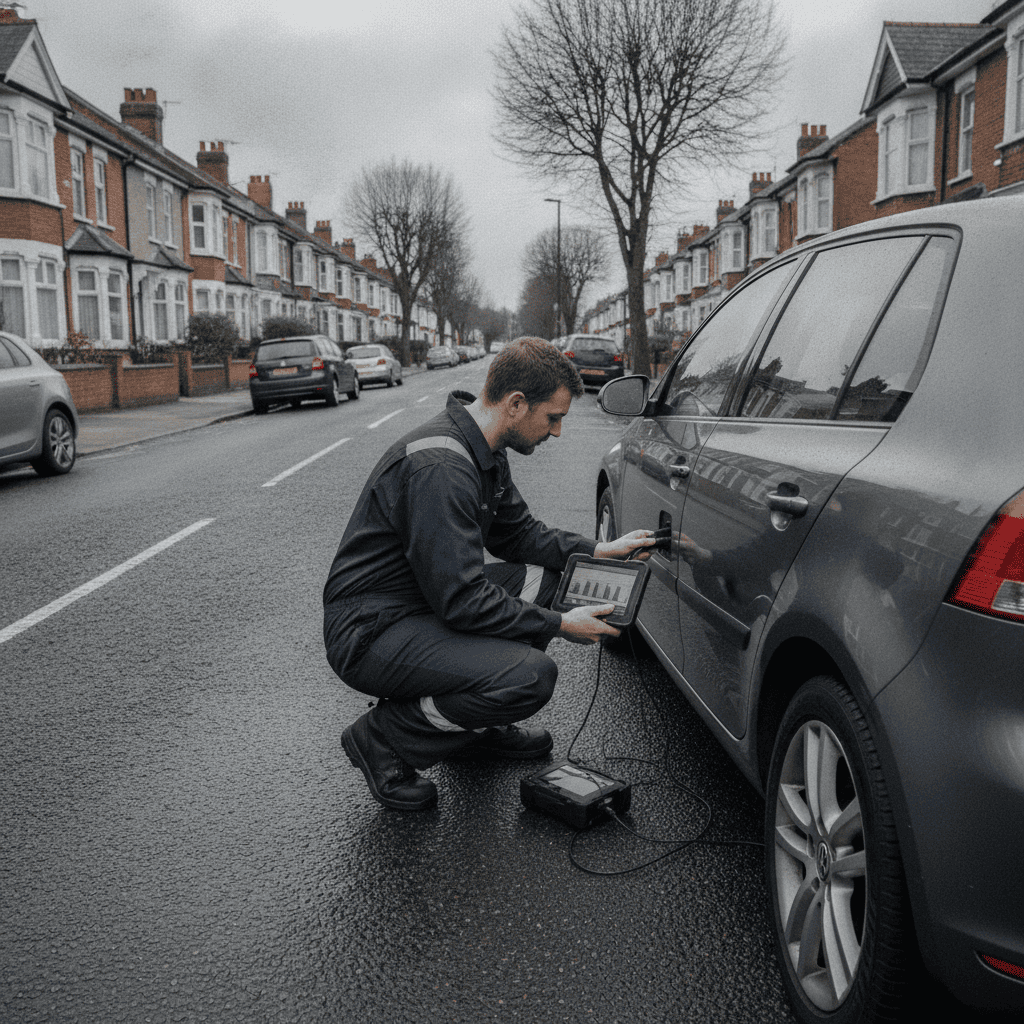
DPF specialist near me: what should a proper check include?
If your diesel has a DPF warning light on, keeps dropping into limp mode, or feels flat and restricted, one of the first things you will search is “DPF specialist near me”. That is a sensible starting point. You want someone local enough to help, and you want the issue sorted before it gets worse.
The problem is that not every DPF check is the same. Some providers treat every blocked DPF like a quick code clear. Some jump straight to cleaning or regeneration without proving the cause first. Others talk about replacement before the filter has even been assessed properly.
A proper DPF specialist should do more than turn up and guess. They should work out what the vehicle is doing, what stage the blockage is at, and whether the filter is the actual fault or just the symptom of something else. This guide explains what a proper DPF check should include, what to avoid, and how to book the right next step rather than just the nearest name.
Mobile-first support
Clear next steps
Service-page support
Contents
- Why the right DPF check matters
- What a proper DPF check should include
- Signs you need a DPF specialist rather than guesswork
- What a good specialist should ask you first
- What should happen after the check
- Common shortcuts to avoid
- Why “near me” matters less than the right process
- Book the right next step
Quick answer
A proper DPF check should confirm the symptoms, review the fault pattern, assess whether regeneration is still suitable, and work out whether the vehicle needs diagnostics, cleaning, regeneration, or urgent help. The best starting points are free DPF diagnostics or mobile DPF diagnostics, not guesswork.
Why the right DPF check matters
A DPF issue can look simple from the driver’s seat. A warning light comes on. The vehicle loses power. You may notice the car feels restricted or starts slipping towards limp mode. From there, many people assume the filter is blocked and the answer is obvious.
Sometimes it is straightforward. Still, DPF faults are rarely just about the filter in isolation. A diesel particulate filter blocks for a reason. It may be repeated short journeys, interrupted regeneration, a pressure-related issue, a temperature-related fault, or a wider diesel problem that has caused soot loading to build too quickly.
That is why the check matters so much. The purpose of a proper inspection is not just to say “yes, the DPF is blocked”. It is to work out why the problem has reached that point and which service actually fits the vehicle now.
Without that step, it is easy to waste money. A car may get sent for forced regeneration when the blockage has already gone too far. Another may be booked in for cleaning when diagnostics should have come first. Some drivers even end up being told they need a replacement filter before the proper recovery options have been checked.
What a proper DPF check should include
If you are searching for a DPF specialist near you, this is the most important section to understand. A proper check should be structured enough to move the vehicle towards the right solution, not just provide a vague opinion.
1. Symptom review
The specialist should ask what the vehicle is doing now. Warning lights, loss of power, limp mode, poor fuel use, or repeated fault returns all help build the picture.
2. Use-pattern review
Short local runs, stop-start driving, interrupted journeys, and motorway use all matter because they affect regeneration.
3. Decision on next step
The check should lead somewhere clear. That may be diagnostics, forced regeneration, mobile cleaning, off-car cleaning, or urgent call-out support.
A good DPF check is practical. It should separate early-stage loading from more serious restriction. It should help show whether the filter may still suit a forced DPF regeneration, whether the vehicle needs a mobile DPF cleaning service, or whether a deeper route is more realistic.
Just as important, a proper check should not rush into the largest job by default. It should match the service to the vehicle’s condition.
| Part of the check | Why it matters | What it may lead to |
|---|---|---|
| Review of warning lights and symptoms | Helps show whether the fault is early, repeated, or already severe | Diagnostics, regen, cleaning, or urgent support |
| Driving pattern and recent use | Shows whether short journeys and failed regen conditions are likely | Confirms likely DPF loading pattern |
| History of previous work | Highlights whether codes were cleared, parts changed, or earlier fixes failed | Avoids repeating the wrong work |
| Decision on current blockage stage | Helps match the right service to the vehicle | Regen, cleaning, off-car cleaning, or call-out |
Signs you need a DPF specialist rather than guesswork
There are times when a basic internet search is enough to calm you down. DPF problems are rarely one of them. The warning signs that usually justify a proper specialist check are easy enough to spot.
Common signs
- DPF warning light on or repeatedly returning
- Loss of power or sluggish acceleration
- Limp mode or heavy restriction
- Vehicle used mostly for short journeys
- Failed attempts to clear the issue already
- More than one warning light showing
Why these point to specialist help
They suggest the issue needs a proper diagnosis, not just a hopeful reset. Once the fault starts repeating or affecting drivability, the cost of guessing usually rises.
This is also where mobile support becomes useful. A driver searching “DPF specialist near me” is often dealing with a car at home, on a work site, or parked up because they do not trust it for normal use. That is exactly where a mobile-first, diagnostics-led service makes sense.
On the live site, this step is supported well through mobile DPF diagnostics at home and the emergency DPF call-out service for more urgent cases.
What a good specialist should ask you first
You can learn a lot about the quality of a DPF specialist from the first conversation. A good one will not just ask for the reg and tell you the answer in ten seconds. They will want a few details that help place the vehicle at the right stage of the fault.
How is the car driving?
Does it still drive normally, or has it gone into limp mode? This changes the urgency and the likely route.
What warning lights are on?
A lone DPF light can mean one thing. Multiple warnings can suggest a wider diesel issue that needs deeper checks.
What use does the vehicle get?
Short local trips often sit behind failed regeneration and rising soot load.
They should also ask whether anything has already been tried. Has someone cleared the codes? Has a regeneration been attempted already? Has the vehicle had recent sensor or service work? Those questions matter because they help stop the next visit from repeating the same failed idea.
If a provider skips all of that and jumps straight to a sale, that is usually a bad sign. A proper specialist should want enough information to recommend the correct first step.
What should happen after the check
The check should end with a clear recommendation, not a vague shrug. That does not mean a fixed answer before the vehicle is seen properly. It means the customer should understand which route is most likely and why.
In practical terms, that often leads to one of a few live service paths on the site:
Possible next steps
- Free DPF diagnostics if the cause still needs confirming
- Mobile DPF diagnostics if the vehicle needs checking where it is parked
- Forced DPF regeneration if the filter still suits controlled soot burn-off
- Mobile DPF cleaning if the vehicle needs more than regeneration alone
- Off-car DPF cleaning if the blockage is heavier and needs a deeper route
Urgent situations
If the car is already struggling badly, the emergency call-out service may be the right first step before any longer treatment choice is made.
This is what makes the blog useful commercially. It helps the reader understand the process, then moves them towards the correct service page without simply repeating that page’s wording.
Common shortcuts to avoid
Drivers facing a warning light often want the fastest answer possible. That is understandable. Still, there are a few common shortcuts that usually create more cost later.
- Do not assume the nearest provider is the right one. Nearness helps, but the process matters more.
- Do not accept a one-size-fits-all answer. Not every DPF fault needs the same service.
- Do not keep clearing the code. If the warning returns, the next step should be diagnosis, not repetition.
- Do not jump straight to replacement. Recovery routes should be checked first where sensible.
- Do not ignore repeat symptoms. Repeated lights, limp mode, and poor performance usually mean the issue is progressing.
The best specialist help is measured by how clearly it narrows the options and explains the next step. If the process feels rushed, vague, or too eager to sell the biggest job first, that is a warning sign in itself.
Why “near me” matters less than the right process
There is nothing wrong with searching “DPF specialist near me”. In fact, it usually reflects real urgency. The car may be off the road, unreliable, or too risky to keep using. Still, location alone does not solve the problem. A poor check carried out nearby is still a poor check.
What really matters is whether the provider has a proper diagnostics-led approach, works through the symptoms logically, and matches the service to the stage of the blockage. That is exactly how DPF Clean Specialist is positioned. The site combines mobile support with clear service pathways for diagnostics, regeneration, cleaning, and urgent call-outs.
That makes it a stronger fit for the user journey than a generic “we fix DPFs” promise. Readers looking for a DPF specialist near them are often not ready to choose a service page straight away. They want confidence that the person they call will check the vehicle properly first.
Book the right next step
If your diesel has a DPF warning light, limp mode, repeat fault returns, or blocked DPF symptoms that are getting worse, start with the right check. That means choosing a DPF specialist who can work out what the vehicle needs now, not simply sell the same fix to every driver.
A proper DPF check should review the symptoms, consider the driving pattern, look at what has already been tried, and guide you towards the right next step. That may be diagnostics, forced regeneration, mobile cleaning, off-car cleaning, or urgent mobile support. The key is that the recommendation should make sense for your vehicle, not just the provider’s quickest sale.
That is why a specialist, diagnostics-led service matters so much. It gives you a route forward based on evidence, not guesswork.
Need a proper DPF check, not guesswork?
If your diesel is showing blocked DPF symptoms, warning lights, or limp mode, book a proper check and find out which service actually fits. DPF Clean Specialist offers mobile support, diagnostics-led advice, and practical next steps across cleaning, regeneration, and urgent call-outs.
Frequently asked questions
What should a proper DPF specialist check first?
They should start with the symptoms, warning lights, driving pattern, and any previous work already carried out. That helps point the vehicle towards the right next step.
Do I need diagnostics before DPF cleaning?
In many cases, yes. Diagnostics help confirm whether the filter really needs cleaning, whether regeneration is still suitable, or whether another issue is behind the blockage.
Can a DPF specialist come to my home or workplace?
Yes. DPF Clean Specialist supports mobile diagnostics and mobile services where suitable, which is useful if the vehicle is parked up or difficult to move.
What if my car is already in limp mode?
If the vehicle is heavily restricted, it is worth asking about urgent diagnostics or the emergency DPF call-out service so the issue can be assessed quickly.
Does a DPF specialist always recommend replacement?
No. A proper specialist should check whether diagnostics, regeneration, or cleaning can solve the issue before replacement is treated as the only answer.