DPF Clean Specialist — West Midlands
Ford Transit DPF Cleaning: Mobile West Midlands Service
Ford Transit DPF warning light on? DPF Clean Specialist provides mobile diagnostics and professional DPF cleaning for Transit vans across the West Midlands — at your premises, no garage visit needed.
The Ford Transit is one of the most widely used commercial vans in the UK — and one of the most common vehicles we see with DPF problems. Whether it is a Transit Custom, a Connect, or a full-size Transit, the DPF warning light is a familiar and frustrating sight for drivers who rely on their van for work.
The good news is that in most cases, a blocked or partially blocked DPF does not mean a replacement. Professional cleaning resolves the problem in the majority of Transit DPF cases — and a mobile service means we come to you, so your van stays out of a garage.
This guide covers why the Ford Transit DPF blocks so frequently, what the warning signs look like, what your options are, and what to expect from a professional mobile DPF cleaning service.
Why the Ford Transit DPF Blocks So Often
The Ford Transit DPF issue is well known in the trade. It comes down to how and where most Transits are driven. The DPF is designed to clear itself through a process called regeneration — raising exhaust temperatures high enough to burn off accumulated soot. This typically requires sustained motorway or dual carriageway driving at 50 mph or more for at least 20 to 30 minutes.
Most Transit vans never get that. They operate on short urban routes, stop-start delivery circuits, or local tradesmen’s jobs — exactly the conditions that prevent regeneration from completing. Over time, soot builds up to the point where the DPF sensor detects a blockage and triggers a warning light.
Models Most Commonly Affected
- Ford Transit Custom (2.0 EcoBlue) — the 2.0 EcoBlue engine fitted from 2016 onwards is particularly prone to DPF issues on urban routes
- Ford Transit 2.2 TDCi (pre-2016) — older model, high mileage, often with high ash loading from accumulated oil burn
- Ford Transit Connect 1.5 EcoBlue — smaller engine, shorter journeys, and a smaller DPF combine to create frequent blockage
- Ford Transit L3 and L4 panel vans — high payload use, idling, and short trips all contribute
Key point: A blocked DPF is a symptom of how the van is used, not a sign of mechanical failure. Cleaning addresses the blockage — but understanding what caused it helps prevent it from happening again.

Warning Signs to Watch For
Ford Transit DPF problems usually progress through recognisable stages. Catching the problem early gives you more options and typically costs less to resolve.
Early Stage Warnings
- DPF warning light illuminated on the dashboard (usually a yellow filter symbol)
- Engine feels slightly less responsive at higher speeds
- Increased fuel consumption with no obvious cause
- Faint smell of diesel from the exhaust during operation
Intermediate Stage Warnings
- DPF light remains on after a longer drive attempt
- Engine management light illuminated alongside the DPF warning
- Noticeable reduction in power, particularly under load
- Van enters limp mode, limiting speed and engine performance
Advanced Stage Warnings
- Van unable to start or cutting out shortly after starting
- Heavy black or grey smoke from exhaust on start-up
- Multiple dashboard lights active simultaneously
- Diagnostic scan showing DPF soot loading above 100 percent
If your Transit has reached the intermediate or advanced stage, a forced regeneration through diagnostics combined with professional DPF cleaning is likely to be needed. Do not delay — a very heavily blocked DPF can cause additional problems if the engine continues to run without resolution.
Common Ford Transit DPF Fault Codes
When a DPF problem is diagnosed on a Ford Transit, one or more fault codes are typically stored in the ECU. These codes help identify how serious the blockage is and whether additional components are contributing to the problem.
| Fault Code | Description | Common Cause |
|---|---|---|
| P2002 | DPF efficiency below threshold (bank 1) | Soot accumulation, failed regeneration |
| P2452 | DPF differential pressure sensor circuit range | Sensor fault or genuine blockage |
| P2453 | DPF differential pressure sensor low input | Sensor failure or disconnected wiring |
| P246C | DPF restriction — soot accumulation excessive | Advanced blockage requiring cleaning |
| P244B | DPF pressure sensor circuit high | Sensor fault or DPF blockage |
| P0299 | Turbocharger under boost | DPF back pressure affecting turbo performance |
It is worth noting that a fault code pointing to the pressure sensor does not always mean the sensor has failed. A genuine blockage causes the same pressure reading. Proper diagnostics — including live data from the DPF differential pressure sensor — will tell you whether the sensor or the filter itself is the issue.
Free diagnostics first: Before any cleaning work is carried out, DPF Clean Specialist runs a full diagnostic check to confirm the extent of the blockage and identify any related faults. This is included at no charge.

Your Cleaning and Regeneration Options
There are several approaches to resolving a Ford Transit DPF problem, and the right one depends on how blocked the filter is, how many kilometres are on the van, and whether any other components are involved.
Passive Regeneration
This happens automatically during longer drives at higher speeds. If the DPF warning has only just come on and the van is not in limp mode, a sustained motorway or dual carriageway drive may allow regeneration to complete. This only works in early-stage cases and requires the engine management system to be functioning normally.
Forced Regeneration via Diagnostics
A forced regeneration uses diagnostic software to command the engine to run a high-temperature cleaning cycle. This can clear a partially blocked DPF where passive regeneration has not worked. It is not effective for heavily blocked filters — and if the DPF ash loading is very high, it can cause additional problems.
Professional DPF Cleaning
For moderate to heavy blockages, professional cleaning using specialist equipment is the most effective approach. This removes both soot and ash from the filter — something regeneration cannot do. After cleaning, a diagnostic check confirms the filter is flowing correctly before the van is returned to service.
DPF Replacement
In cases where the filter substrate is cracked, damaged, or very heavily ash-loaded after high mileage, replacement may be the only viable option. This is the exception rather than the rule, and a proper diagnosis will confirm whether cleaning or replacement is appropriate before any work is carried out.
How Mobile DPF Cleaning Works
DPF Clean Specialist operates as a mobile service across the West Midlands, which means the work comes to you — at your depot, yard, or regular parking location. There is no need to arrange transport or take time off to drop a van at a garage.
What the Process Involves
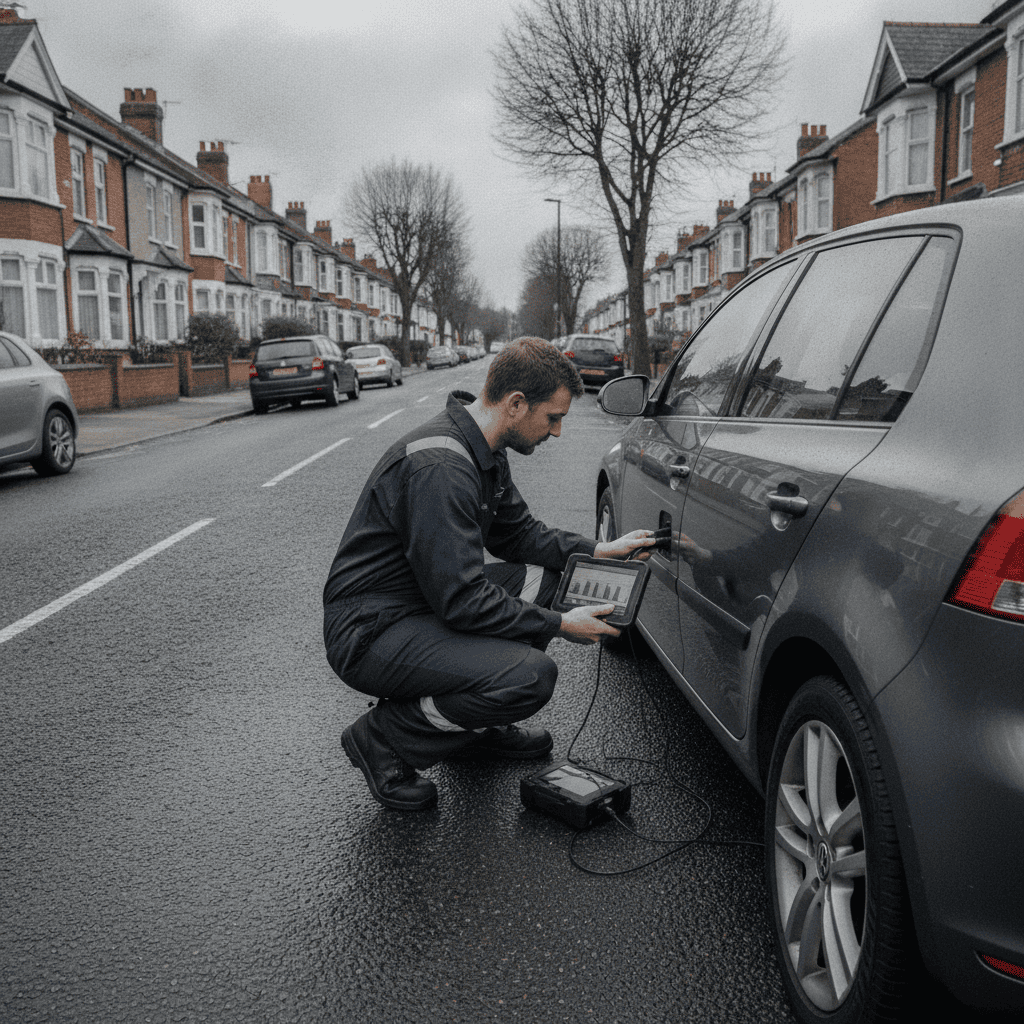
- Initial diagnostic scan: We connect professional diagnostic equipment to read current fault codes, DPF soot loading, ash accumulation, and live sensor data
- Assessment and explanation: Based on the scan, we explain the findings and confirm the recommended approach before any work begins
- Cleaning process: Using specialist DPF cleaning equipment, we carry out the cleaning procedure on-site
- Post-clean diagnostic check: A second diagnostic scan confirms the filter is flowing correctly and that fault codes have cleared
- Guidance on next steps: We explain how to manage the van to reduce future blockage risk and advise on whether any further monitoring is needed
The process is typically completed within a few hours, depending on the severity of the blockage and the Transit model. In most cases, the van is back in service the same day.
We cover Birmingham, Wolverhampton, Walsall, Dudley, Sandwell, Solihull, and surrounding West Midlands areas. Contact us to confirm coverage for your location.
When Cleaning Is Not Enough
Most Ford Transit DPF problems are resolved by professional cleaning. However, there are situations where replacement is the more appropriate recommendation.
Signs That Replacement May Be Needed
- The DPF substrate is physically cracked or damaged (visible on inspection or via flow testing)
- The van has very high mileage and the ash accumulation has reached maximum capacity
- The filter has been cleaned multiple times over a short period without lasting results
- Cleaning restores flow but the van is driven on short urban routes that will cause rapid re-blocking
In practice, a proper pre-clean diagnostic assessment will indicate whether cleaning is likely to be effective. If replacement is needed, we will say so upfront — there is no value in charging for a cleaning service that is unlikely to provide a lasting result.
How to Reduce Future DPF Problems
Once the DPF has been cleaned and the van is back in service, a few straightforward habits significantly reduce the likelihood of the problem recurring.
- Incorporate regular longer drives: Even a 20-minute motorway run at 60 mph once or twice a week gives the DPF an opportunity to regenerate naturally
- Use the correct engine oil: Low-SAPS engine oil (as specified in the Ford Transit owner’s manual) reduces ash build-up inside the DPF over time
- Avoid excessive idling: Extended periods of idling prevent the exhaust from reaching regeneration temperatures and accelerate soot build-up
- Service on schedule: Regular oil and filter changes reduce carbon contamination and support normal regeneration cycles
- Do not ignore early warnings: A DPF warning light that is addressed early is far less costly than one that is left until limp mode or breakdown
Fleet operators note: If you run multiple Ford Transits on urban routes, a periodic DPF inspection and forced regeneration programme can prevent costly breakdowns. See our commercial fleet DPF services.
For owners of other diesel vans in the West Midlands, our guide to VW Transporter T6 DPF cleaning covers the same mobile specialist approach for T6 owners across the region.
Ford Transit DPF Warning Light On?
DPF Clean Specialist provides mobile diagnostics and professional DPF cleaning for Ford Transit vans across the West Midlands. We come to your location — no garage visit needed.
Frequently Asked Questions
Can a Ford Transit DPF be cleaned on-site?
Yes. DPF Clean Specialist operates as a fully mobile service, so the cleaning is carried out at your location — depot, yard, or regular parking spot. No garage visit is required.
How long does Ford Transit DPF cleaning take?
In most cases the process is completed within a few hours, including the initial diagnostic scan, the cleaning procedure, and the post-clean verification check. Most vans are back in service the same day.
Will the DPF warning light go off after cleaning?
Once the DPF is cleaned and the filter is flowing correctly, the fault codes can be cleared and the warning light will go off. If the warning light returns shortly after, it typically indicates either that the underlying cause has not been addressed or that the van is returning to the same short-journey operating pattern.
Is it worth cleaning a high-mileage Ford Transit DPF?
In most cases, yes — provided the filter substrate is intact and not physically damaged. A diagnostic scan before cleaning will indicate whether cleaning is appropriate or whether replacement is more cost-effective given the van’s age and mileage.
Do you cover all Ford Transit models?
We work on all common Ford Transit variants including the Transit Custom, Transit Connect, and full-size Transit panel van. Contact us with your registration for details specific to your van.