White smoke coming from a diesel exhaust is one of those warning signs that drivers often dismiss as a cold-start quirk — but it can also indicate a developing DPF fault, cooling system problem, or fuel issue. Knowing the difference matters. This guide explains what each type of white exhaust smoke actually means, which causes are linked to the DPF, and what to do if the smoke is persistent or paired with a warning light.
In this guide
White smoke and a warning light?
Don’t wait — early diagnostics prevent small faults from becoming expensive repairs. We come to you across the West Midlands.
Why diesel exhausts produce white smoke
White or pale grey smoke from a diesel exhaust can have several different origins. Some are completely normal, some are minor, and some point to serious mechanical problems that need attention before they cause lasting damage.
Unlike petrol engines, diesel engines operate under high compression and produce a distinct exhaust character at startup. That means white smoke is not automatically alarming — but context matters enormously. The temperature outside, how long the engine has been running, whether a warning light is on, and how long the smoke lasts all help to separate a normal cold-start plume from something that needs investigation.
The four most common causes of white smoke from a diesel are: normal condensation and water vapour at startup, DPF-related incomplete combustion, coolant entering the combustion chamber, and fuel injection problems. Each has its own characteristics, and understanding them helps you make the right call about whether to carry on driving or book a check.
Cold-start steam vs genuine white smoke
The white vapour you see on cold mornings when you first start a diesel is nearly always harmless. It is water condensation and steam created as cool exhaust gases meet cold air in the exhaust system and atmosphere. This type of white smoke typically disappears within the first minute or two of running, once the engine and exhaust reach operating temperature.

Signs this is normal cold-start behaviour
- Smoke clears completely within one to two minutes
- No unusual smell — just neutral or mildly damp odour
- No warning lights on the dashboard
- No drop in engine performance, no rough idle
- Occurs mainly on cold mornings, not in summer or after a warm engine restart
Rule of thumb: If the white smoke clears by the time you reach the end of your road and there are no warning lights, it is almost certainly normal water vapour. If it persists beyond two minutes or is accompanied by any fault lights, treat it as a potential problem.
Signs the smoke is a fault, not condensation
- Smoke persists after the engine is fully warm
- Smoke has a sweet or chemical smell (coolant leak)
- Smoke appears on warm restart, not just cold start
- DPF warning light, engine management light, or limp mode present
- Engine running rough, misfiring, or lacking power
How white smoke connects to DPF problems
The link between white smoke and the DPF is less direct than many drivers assume, but it is real. A heavily blocked DPF does not directly cause white exhaust smoke — but several DPF-related faults can lead to smoke-like symptoms, and understanding the mechanism helps.
Incomplete DPF regeneration
During a regeneration cycle, the DPF raises exhaust temperatures to burn off accumulated soot. If a forced regeneration is triggered but the engine is switched off prematurely, or if the regeneration fails to complete due to a sensor fault, unburnt fuel residue can enter the exhaust system and produce white or light grey smoke on the next cold start. The smoke usually smells faintly of unburnt diesel.
Failed regeneration and raw fuel in the exhaust
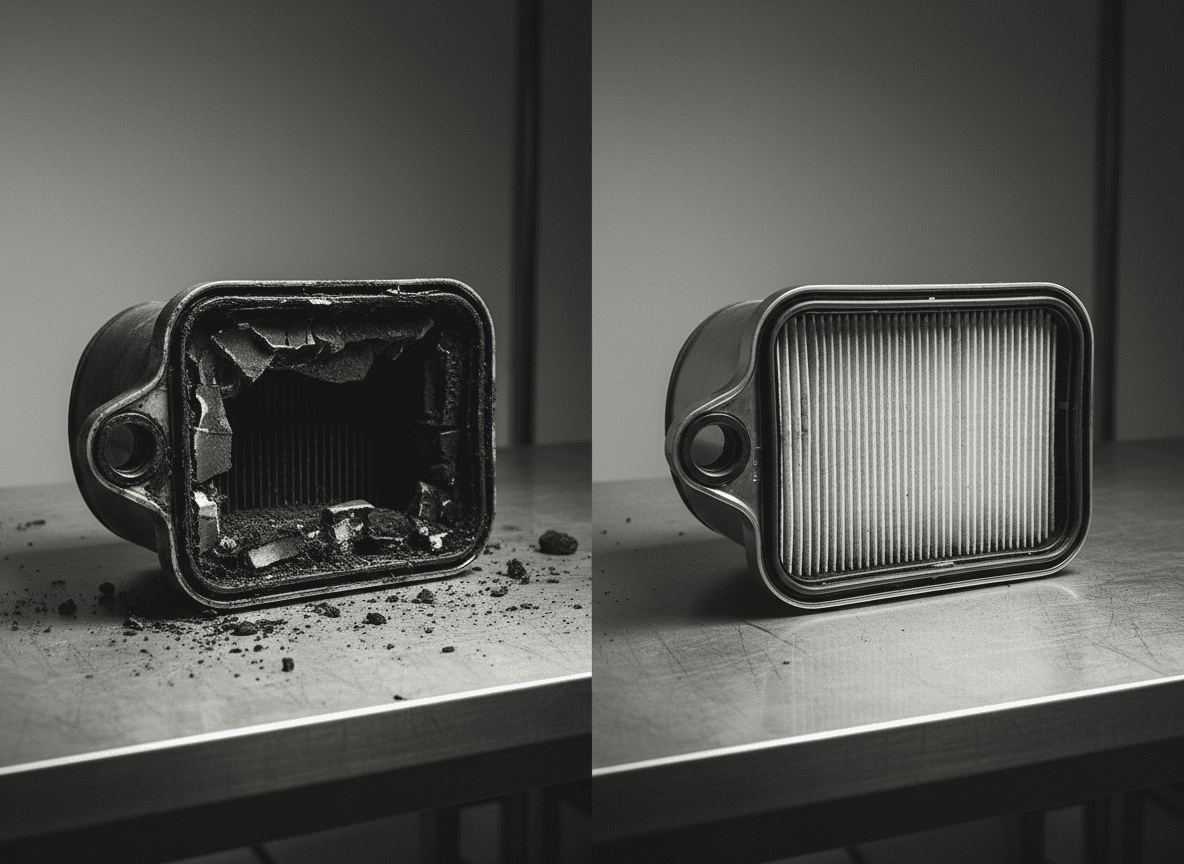
If your DPF is blocked and the system has attempted multiple failed regenerations, small amounts of raw diesel may have accumulated in the exhaust. This produces a distinctive off-white or pale smoke with a strong diesel smell — different from the neutral cold-start vapour. If you notice this alongside a DPF warning light, it is a strong signal that the DPF needs professional attention rather than another regeneration attempt.
Do not attempt further motorway regeneration runs if your DPF warning light is flashing or if white smoke persists. Continued attempts with a heavily blocked filter can damage the DPF, turbo, or engine. Professional diagnostics should come first.
Oil dilution from failed regeneration attempts
Repeated unsuccessful regeneration cycles can cause fuel to drain into the engine oil, thinning it and reducing lubrication efficiency. In severe cases, this leads to a slight blue-white smoke at startup as the diluted oil burns off. This is a secondary symptom — the primary problem is the blocked DPF — but it adds urgency to getting the fault resolved properly.
Other causes: coolant, injectors, and fuel
Not all white smoke is DPF-related. Two other common causes are worth understanding, particularly if you have a DPF warning light but also white smoke that persists well beyond a cold start.
Coolant in the combustion chamber
A blown head gasket or cracked cylinder head can allow engine coolant to enter the combustion chamber, where it burns and produces thick white smoke. The key indicator here is the smell — burning coolant has a distinctly sweet, almost sickly odour that is easy to distinguish from unburnt diesel vapour. You may also notice the coolant reservoir dropping without any visible external leak, or a milky residue inside the oil filler cap.
This is a serious mechanical fault unrelated to the DPF, but it can trigger the engine management light and potentially put the engine into limp mode. If you suspect a head gasket issue, stop driving and get the vehicle inspected — continued driving with coolant loss causes rapid engine damage.
Fuel injection problems
Faulty injectors that leak or deliver incorrect fuel quantities can produce white or grey smoke, particularly at idle or on acceleration. Injector issues also often cause rough running, a misfiring sensation, and increased fuel consumption. They can contribute to DPF problems over time, since poor combustion produces more soot than a healthy engine.
| Smoke type | Likely cause | Smell | Urgency |
|---|---|---|---|
| White steam, clears in 1–2 mins | Normal cold-start condensation | None or neutral | None — monitor only |
| White smoke persisting after warm-up | Failed DPF regeneration / unburnt fuel | Diesel smell | Book diagnostics soon |
| Thick white/sweet-smelling smoke | Coolant in combustion chamber | Sweet, chemical | Stop driving — inspect now |
| White/grey smoke with rough idle | Injector fault or fuel delivery issue | Diesel or acrid | Book diagnostics soon |
| Blue-white smoke at startup | Oil dilution from failed regeneration | Oily, acrid | Book diagnostics — DPF issue |
When white smoke needs professional attention
In practical terms, the threshold for action is straightforward. If the white smoke clears quickly and there are no warning lights or performance issues, monitor the vehicle but do not panic. If any of the following apply, book a diagnostic check before the problem develops further:
- White smoke persists for more than two to three minutes after startup
- White smoke appears when the engine is already warm
- DPF warning light, engine management light, or limp mode is active
- The smoke has any smell beyond neutral — sweet, chemical, or strong diesel
- Engine performance has dropped, or the car is running rough
- Coolant level is dropping without any visible external leak
- You have recently had multiple failed regeneration attempts
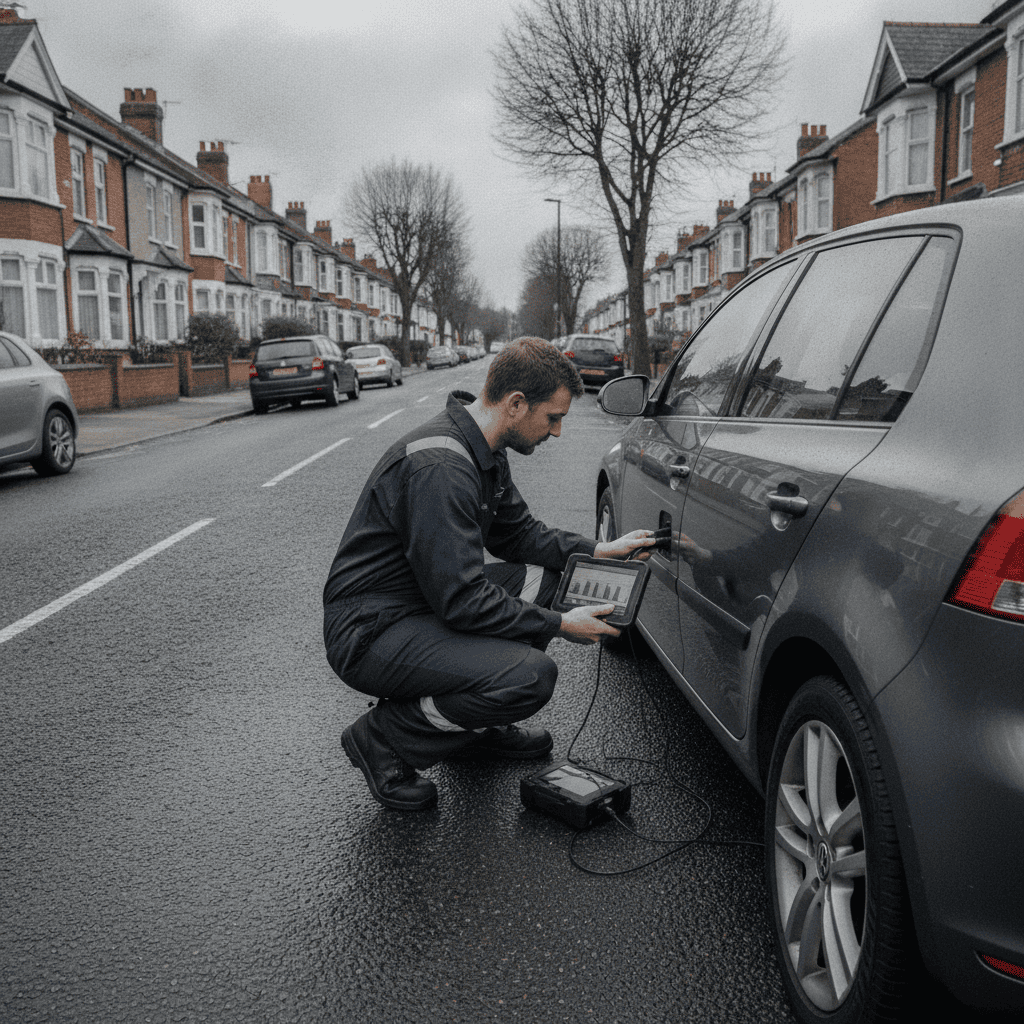
West Midlands drivers: DPF Clean Specialist operates a fully mobile service across Birmingham, Coventry, Wolverhampton, Walsall, Dudley, Lichfield, Cannock, and surrounding areas. We carry diagnostic equipment to your location — no garage visit needed.
Why diagnostics come first
One of the most common mistakes drivers make when they see white smoke is to attempt a forced motorway regeneration run before knowing what the fault actually is. If the root cause is a coolant leak, an injector fault, or a DPF that is too blocked for passive regeneration, a long motorway run will not help — and in some cases can make things worse.
Proper diagnostics identifies the fault code, checks live sensor data, and confirms whether the issue is DPF-related, mechanical, or something else entirely. At DPF Clean Specialist, we run a free diagnostic check before any cleaning or repair work is carried out. That means you know exactly what the problem is and what it will take to fix it — no guesswork, no unnecessary work.
In most cases, a blocked DPF causing smoke-related symptoms is resolvable without replacing the filter. Mobile DPF cleaning, forced regeneration, or pressure sensor replacement can resolve the fault at a fraction of the cost of a new filter — but only if the right diagnosis has been made first.
Seeing white smoke from your diesel?
Don’t wait for the warning light. We come to your location across the West Midlands — free diagnostics, no garage needed.
Is white smoke from a diesel always a sign of a DPF problem?
Not always. White vapour on cold mornings is usually harmless condensation and clears quickly. White smoke that persists after the engine warms up, or that is accompanied by a warning light, is more likely to indicate a DPF fault, coolant leak, or injector issue and should be investigated.
Can I keep driving if my diesel is producing white smoke?
It depends on the cause. If the smoke clears quickly and there are no warning lights, short-term driving is usually fine. If the smoke persists, has a sweet smell, or is paired with a DPF warning light or limp mode, you should limit driving and book a diagnostic check as soon as possible to avoid further damage.
Why does my diesel produce white smoke after a forced regeneration?
If a regeneration cycle is cut short — for example by switching the engine off too early — unburnt fuel residue can accumulate in the exhaust system. This often produces white or pale smoke with a diesel smell on the next start. It usually clears once the engine reaches temperature, but if it persists, a diagnostic check is advisable to confirm the regeneration completed successfully.
What is the difference between white smoke and steam from a diesel exhaust?
Steam is thin, clears very quickly, and has no smell. It is caused by water vapour in the exhaust system and is normal on cold or damp days. Genuine white smoke is thicker, lingers longer, and may have a diesel, sweet, or oily smell depending on the cause. If you can’t tell by looking, check whether it clears within two minutes and whether any warning lights are active.
How much does it cost to fix a DPF fault causing white smoke?
It depends entirely on the underlying cause. A blocked DPF that can be cleaned typically costs significantly less than replacement. Injector or head gasket faults involve separate repair work. DPF Clean Specialist carries out a free diagnostic check first, so you know the exact cause and likely cost before any work is agreed.