Common DPF Fault Codes and What They Mean
Fault codes are clues, not verdicts.
This guide explains the most common DPF-related codes, what they usually point to, and the next step that stops you wasting money on guesswork.
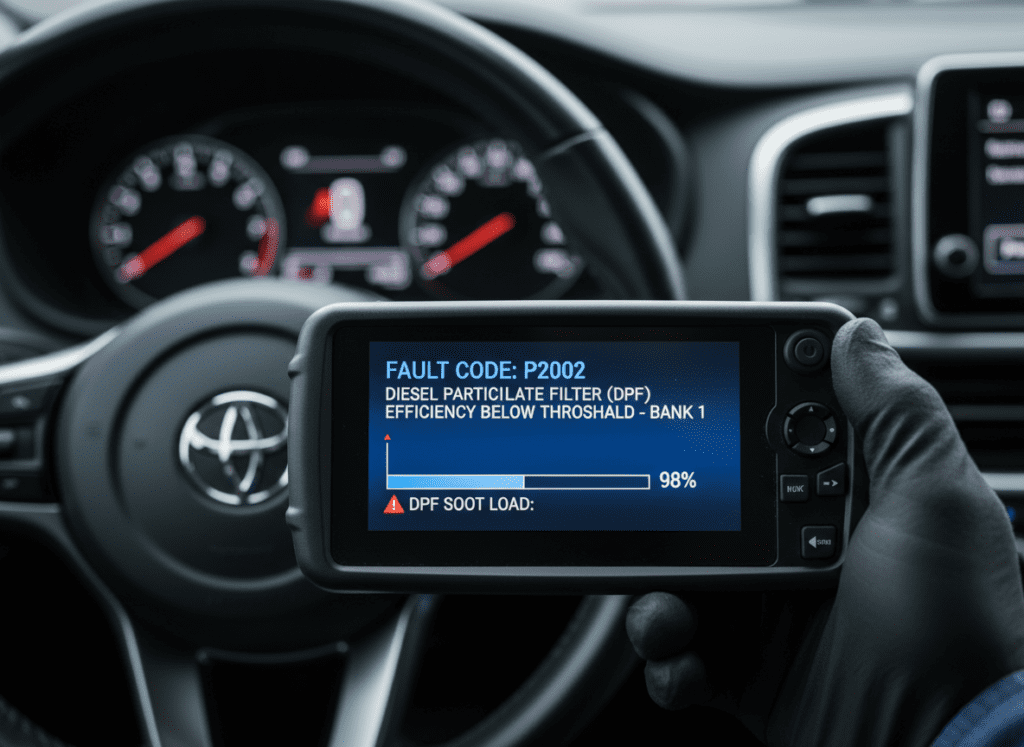
If you’ve plugged in a scanner and seen a code like P2002, you’re not alone.
Most DPF problems start with a warning light and a string of letters and numbers.
The problem is that one code can have more than one cause.
The DPF might be restricted.
A sensor might be reading wrong.
Regeneration might be failing.
This post explains common DPF fault codes in plain terms.
It also tells you the next step that actually proves what’s going on.
The rule that saves you money
A fault code points to a system.
Live data and testing confirm the cause.
That’s why diagnostics comes before cleaning, regeneration, or parts.
If you want a quick guide to symptoms first, this is useful:
DPF warning signs and when cleaning makes sense
.
Why DPF codes appear in the first place
The ECU monitors how easily exhaust gases pass through the DPF.
When it sees restriction building or regeneration failing, it logs faults.
That can happen for straightforward reasons like short journeys.
It can also happen because another issue causes the engine to produce soot too quickly.
Common triggers
- Short trips that interrupt regeneration
- Driving style that never lets the exhaust heat up
- Sensor readings that don’t match reality
- Failed regens that keep repeating
- Underlying faults that increase soot production
For the deeper causes, this page is the best overview:
what causes DPF blockages
.
Common DPF fault codes and what they usually mean
Below are the codes we see most often across diesel cars and vans.
Treat these as likely directions, not guaranteed answers.
The same code can be triggered by different root causes on different vehicles.
| Fault code | What it usually points to | Common symptoms | Best next step |
|---|---|---|---|
| P2002 | DPF efficiency below threshold (often restriction) | DPF light, reduced power, frequent regen attempts | Diagnostics to confirm soot load, pressures, and regen status |
| P2463 | DPF soot accumulation (high soot load) | Warning lights, limp mode risk, strong regen demand | Forced regen if suitable, based on checks |
| P242F | DPF restriction due to ash accumulation (often long-term) | Recurring DPF issues, regens more frequent over time | Diagnostics to confirm loading type and best plan |
| P2452 / P2453 | DPF pressure sensor circuit / performance issue | DPF light with odd behaviour, warnings that don’t match driving | Diagnostics to check sensor readings and hoses |
| P2458 | Regeneration duration too long (regen not completing properly) | Fuel use up, fans running, repeated regen attempts |
Diagnose why regen fails, then consider cleaning or forced regen |
| P244A / P244B | DPF differential pressure too high (restriction or sensor reading fault) | Power loss, DPF light, potential limp mode | Diagnostics to confirm true pressure vs sensor fault |
If you’re seeing codes and wondering if it’s safe to keep driving, read this next:
home page
or this guide:
DPF cleaning vs replacement
.
How to use the code to get the right fix
If you only take one thing from this post, take this.
A code is the start of the process, not the end.
Step 1: Confirm restriction
A proper check looks at soot load estimates, differential pressure, and whether the car is attempting regeneration.
Step 2: Check why it happened
Short trips, interrupted regens, and engine faults can all cause rapid soot build-up.
Fixing the root cause stops repeat issues.
Step 3: Choose the right service
Cleaning suits restriction-led cases.
Forced regen suits vehicles that can’t complete active regens.
Urgent call-out suits breakdown-risk situations.
If you want a plain-English explanation of regeneration types, this is a good companion read:
forced DPF regeneration
.
Got a DPF fault code on your scanner?
Don’t throw parts at it.
Book a diagnostic check and we’ll confirm what the code actually means on your vehicle.
Then we’ll recommend the right fix.
If you need urgent help, use:
emergency DPF call-out service
.