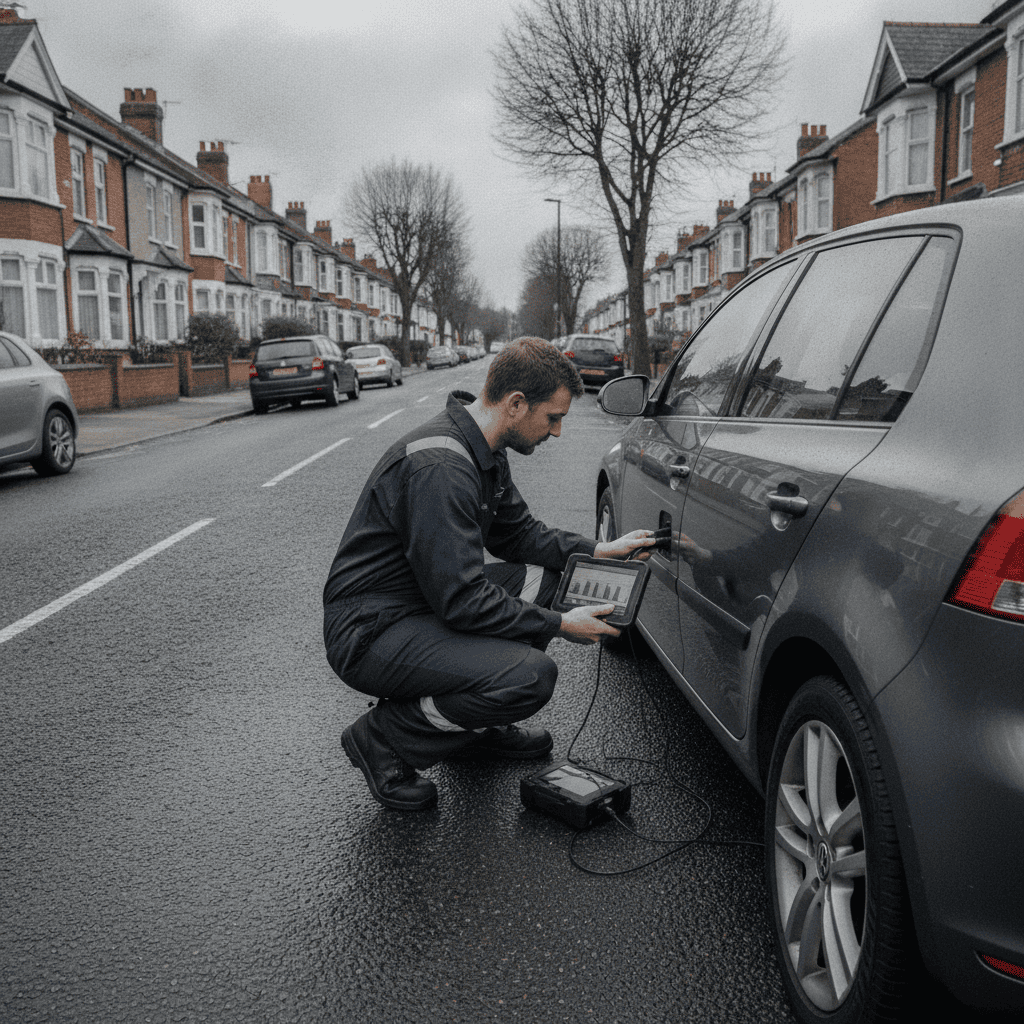
Why Short Journeys Cause DPF Problems
If you mainly drive five or ten minutes at a time, your DPF can struggle.
This guide explains why short trips clog DPFs faster, the signs to watch for, and what you can do to stop repeat blockages.
Diesels can be great for longer runs.
They don’t always love short trips.
The DPF needs heat and time to clean itself through regeneration.
Short journeys often end before the engine is warm enough, and before regeneration can complete.
The result is simple.
Soot builds faster than it burns off.
Then you get warning lights, regen failures, and sometimes limp mode.
If you recognise this pattern, you’re not alone
- School runs and local commuting
- Stop-start city driving
- Short trips with the engine rarely reaching full temperature
- DPF warning lights that keep coming back
If you’re already seeing symptoms, this guide helps you confirm it:
DPF warning signs and when cleaning makes sense
.
The DPF needs heat and time
Your DPF collects soot as you drive.
To stay healthy, it needs to burn that soot off through regeneration.
Regeneration depends on two things you often don’t get on short trips.
Stable exhaust temperature.
Enough time to complete the cycle.
Cold starts create more soot
A cold engine runs richer and takes time to stabilise.
That can increase soot production early in the drive.
Regens get interrupted
If you switch off mid-regen, the soot stays.
Do that repeatedly and the soot load climbs.
Stop-start keeps temps down
Traffic and short bursts of speed don’t keep exhaust temperature stable.
The system struggles to hold the conditions regeneration needs.
For a full breakdown of causes, see:
what causes DPF blockages
.
How short trips turn into warning lights
A DPF doesn’t block overnight.
It builds in stages.
Short journeys make those stages happen faster.
The typical progression
- DPF starts loading faster than it clears
- Car attempts more regens
- Fuel use creeps up and fans run more often
- DPF warning light appears
- Regens fail more often
- Limp mode or “performance limited” messages
If you’re currently deciding whether to keep driving, this post is relevant:
DPF cleaning vs replacement
.
What you can do if your driving is mostly short trips
You don’t need to change your whole life to protect your DPF.
You just need to give the system a fair chance to regenerate.
Build in one longer run each week
A steady drive can help the car complete an active regeneration.
It’s not a magic fix for every case, but it helps when the issue is mainly driving pattern.
Don’t ignore early signs
If the DPF light comes on, acting early usually gives you more options.
Waiting often leads to forced regen or call-out work.
Get a proper diagnostic check
Fault codes plus live data show whether the car is regenerating, how loaded the DPF is, and whether an underlying fault is making it worse.
If it’s already blocked: what usually works
Once restriction is present, the goal is to restore normal flow and stop the cycle repeating.
The right service depends on how far the DPF has loaded and whether the car can still regenerate.
On-car DPF cleaning
Ideal when the DPF is restricted with soot and you want a practical mobile solution.
Forced regeneration
Used when the vehicle can’t complete active regens and needs a controlled intervention, based on checks.
Emergency call-out
Best when you’re in limp mode, stranded, or you can’t risk the vehicle failing during work use.
Short journeys and a DPF warning light?
Let’s confirm the cause and sort it properly.
We offer free diagnostics and mobile DPF support across the West Midlands.
If you’re comparing bigger options, read:
DPF cleaning vs replacement
.