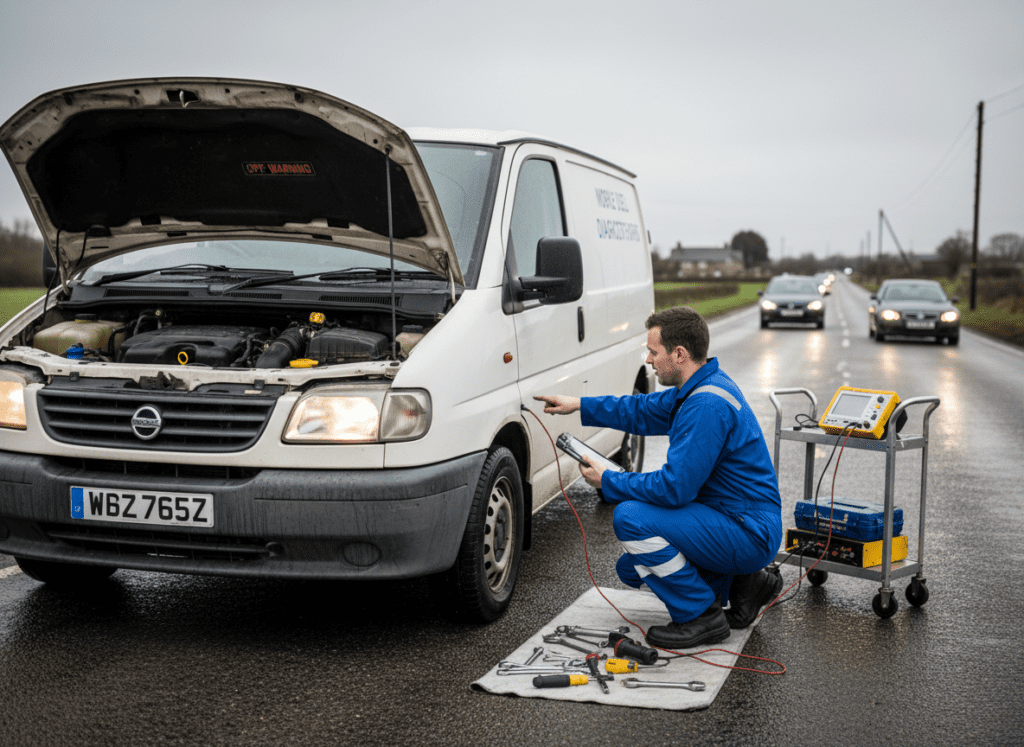
Limp mode after a DPF fault: what usually causes it?
If your diesel has gone into limp mode after a DPF fault, it usually feels like the problem has escalated fast. One day the car may only have shown a warning light. The next, it is down on power, feels restricted, and will not drive properly.
That jump from warning light to limp mode catches a lot of drivers out. It can feel sudden, but in many cases the DPF problem has been building in the background for a while. Short journeys, interrupted regeneration, repeat fault codes, or a blocked filter that has been left too long can all push the car to the point where the engine management system limits power to protect itself.
This guide explains what usually causes limp mode after a DPF fault, why the car reacts that way, what drivers often get wrong next, and when to book diagnostics, regeneration, cleaning, or urgent support. The aim is to help you understand the pattern before the vehicle loses more performance or ends up off the road.
Diagnostics first
Service-supportive
Clear next steps
Contents
Quick answer
Limp mode after a DPF fault usually means the vehicle has reached a point where the system is protecting itself from a worsening blockage or related diesel issue. In many cases, the car needs DPF diagnostics first to confirm whether the filter needs regeneration, mobile cleaning, deeper cleaning, or urgent support.
What limp mode actually means
Limp mode is the vehicle’s way of reducing performance when the engine management system believes something serious enough is happening that normal power could make the situation worse. It is not a fault in itself. It is more like a protective reaction.
On a diesel with DPF trouble, limp mode often shows up as severe loss of power, restricted acceleration, poor throttle response, and a car that feels unwilling to rev or pull as it normally would. The purpose is simple: protect the engine and exhaust system while warning the driver that the fault has moved beyond the stage of being ignored.
That is why limp mode feels so frustrating. It does not tell you the full cause by itself. It only tells you the car has decided the current fault matters enough to limit performance. When the DPF is involved, that often means soot loading or regeneration failure has reached a level where the vehicle no longer wants to operate normally.
Why DPF faults can trigger limp mode
A diesel particulate filter exists to trap soot before it leaves the exhaust system. That works well when the car is allowed to regenerate properly and clear the soot load in normal use. The trouble starts when regeneration keeps getting interrupted or when soot builds faster than the vehicle can clear it.
Once the DPF becomes too restricted, the engine has to work against that blockage. Backpressure rises, performance drops, and the system starts to detect that the filter is no longer operating within a normal range. At some point, the engine management system may decide that normal driving could make things worse and will place the car in limp mode.
This is why the move into limp mode often feels like a sudden failure, even though the fault may have been developing for days or weeks. The DPF warning light may have been the first sign. Reduced performance may have followed. Limp mode is often the stage where the system says the problem has now gone far enough that it needs action, not delay.
In simple terms, a DPF fault can trigger limp mode because the car can no longer ignore the effect that the blockage is having on how it runs.
see our guide to
DPF pressure readings explained.
Common causes of limp mode after a DPF fault
There is more than one route into limp mode, even when the DPF is clearly part of the story. The most common causes tend to fall into a few patterns.
Severe soot loading
The filter has become too blocked for the vehicle to manage it through normal operation, so the car limits power.
Repeated failed regeneration
The car has tried to clear the soot, but the regen cycle keeps failing or getting interrupted.
Delayed action
The warning light has been left too long, allowing a manageable issue to become a more serious one.
Those are the common headline causes, but the detail matters too. A vehicle that only does short town trips may never get the right conditions to complete regeneration. Another may have already had the fault code cleared once or twice, with the real issue left in place. In both cases, limp mode is not random. It is the outcome of a problem that has not been resolved properly.
This is also where a broader diesel fault can sit behind the DPF issue. The filter may be blocking because something else is affecting the combustion or regen process. That is why a symptom-led post like this needs to point firmly towards diagnostics, not just cleaning by default.
How the problem usually builds up
For many drivers, the path into limp mode follows a fairly clear pattern once you look back at it properly.
| Stage | What the driver may notice | What it often means |
|---|---|---|
| Early stage | DPF warning light, slightly heavier running, poorer economy | The filter is loading up and the vehicle is struggling to clear it normally |
| Middle stage | Repeated warnings, sluggish drive, signs of failed regen | The problem is worsening and normal recovery is no longer happening reliably |
| Later stage | Limp mode, major power loss, restricted vehicle use | The system has moved into protection mode because the issue has gone too far to ignore |
This matters because drivers often remember only the last stage. They focus on the limp mode and overlook the warning signs that came before it. That is understandable, but it can hide the real story. Limp mode is usually the result of the vehicle reaching a threshold, not the first moment the fault existed.
That is also why some vehicles still suit a forced DPF regeneration when they are caught early enough, while others need a mobile DPF cleaning service or even a deeper route if the blockage has built up too far.
Signs the DPF may be the main issue
It is not always possible to confirm the cause from symptoms alone, but there are a few clues that strongly suggest the DPF is central to the problem rather than only appearing in the fault list by coincidence.
Useful clues
- The DPF warning light appeared before limp mode started
- The vehicle mainly does short journeys or stop-start driving
- Performance has declined gradually, not instantly
- The fault has returned after earlier resets or warning clears
- The vehicle feels choked rather than mechanically noisy
- There are known signs of failed or interrupted regeneration
Why these signs matter
They fit the pattern of a filter that has been loading for some time and has reached the point where the car is now protecting itself. That points strongly towards a DPF-led diagnosis rather than guessing elsewhere first.
When that pattern is clear, a driver searching for answers usually needs more than a general garage. They need a DPF-focused path that starts with mobile DPF diagnostics or free diagnostics so the next service choice is based on evidence.
When it may be more than the DPF
This is where drivers can go wrong if they assume every limp mode event after a DPF fault is only about the filter. Sometimes the DPF is the main issue. Sometimes it is the visible result of something else in the diesel system.
If there are multiple warning lights, repeated failed fixes, or a history of other running issues, the blockage may not be the whole story. The DPF may still need treatment, but the reason it blocked in the first place may need checking too. That is why the right service path is diagnostic-led rather than based on assumptions.
From a user perspective, this is exactly why the site should push the reader towards the right live pages rather than a one-size-fits-all answer. If the fault is straightforward, the vehicle may fit regeneration or cleaning. If it is not straightforward, the first job is to prove why the vehicle has gone into limp mode at all.
What not to do when limp mode starts
Once limp mode appears, drivers often make one of a few common mistakes. Most of them come from wanting a fast solution, which is understandable. Still, they can make the job more expensive or delay the proper fix.
- Do not keep driving it hard and hope it clears itself. If the vehicle has already limited power, it has done that for a reason.
- Do not keep clearing the fault and carrying on. If the car returns to limp mode, the root issue is still in place.
- Do not assume cleaning is always the first answer. Some cases still suit regeneration. Others need deeper checks first.
- Do not ignore other warning lights. Multiple warnings often mean the fault picture is wider than the filter alone.
- Do not leave the vehicle parked indefinitely without action. The longer the issue sits, the less likely a simple recovery route may become.
The aim is not to panic the driver. It is to stop the usual pattern of delay, repeated resets, and wrong assumptions. Once limp mode starts, the best use of time is to get the vehicle assessed properly.
What the right next step looks like
The right next step depends on how serious the symptoms are and what the vehicle is doing right now. If the car is heavily restricted or needs urgent help, the emergency DPF call-out service may be the most practical starting point. That is especially relevant when the vehicle is parked up at home, at work, or somewhere it cannot be trusted for normal use.
If the issue is serious but stable enough for an assessment, the strongest entry point is usually mobile DPF diagnostics at home or the site’s free DPF diagnostics route. That way, the fault can be checked properly before the wrong service is chosen.
From there, one of a few commercial paths usually makes sense:
Possible service paths
- Forced DPF regeneration if the filter still suits controlled soot burn-off
- Mobile DPF cleaning if the blockage needs more than regen alone
- Off-car DPF cleaning if the filter needs a deeper route
- Direct contact if the symptoms need checking before the right booking choice is obvious
Why this matters
It stops the customer jumping straight into the wrong service and keeps the journey aligned with what the vehicle actually needs at this stage.
That is the strongest way to handle limp mode after a DPF fault. Treat the symptom seriously, use it as a sign the vehicle needs proper assessment, and move quickly into the service route that fits the evidence rather than the guess.
For many readers, the key takeaway is simple. Limp mode after a DPF fault usually means the problem has gone beyond the point of being ignored. It does not automatically mean the worst-case outcome, but it does mean the next step should be specialist, practical, and diagnostics-led.
Car in limp mode after a DPF fault?
If your diesel is restricted, down on power, or showing repeat DPF warnings, get it checked before the fault worsens. DPF Clean Specialist offers mobile support, diagnostics-led advice, and practical next steps across regeneration, cleaning, and urgent call-out work.
Frequently asked questions
Can a blocked DPF really put a car into limp mode?
Yes. If the filter becomes restricted enough, the engine management system may limit power to protect the vehicle and warn the driver that the issue needs attention.
Does limp mode always mean the DPF needs replacing?
No. Limp mode means the fault has become serious enough for the car to protect itself. The next step is to diagnose whether regeneration, cleaning, or a deeper route is suitable.
What should I do first if my diesel goes into limp mode after a DPF warning?
Book diagnostics first, especially if the warning has returned, the vehicle is down on power, or the issue seems to be getting worse.
Can limp mode happen because regeneration kept failing?
Yes. Repeated failed regeneration is one of the most common paths into a more severe DPF issue, including limp mode.
What if the vehicle needs urgent help where it is parked?
If the car is heavily restricted or you need a fast response, the emergency DPF call-out route may be the best first step.