DPF Clean Specialist — West Midlands
DPF Delete vs DPF Cleaning: What West Midlands Drivers Need to Know
If you have been quoted for a DPF delete — or seen it advertised as a quick fix — here is what that actually involves, why it is illegal for road use, and what the genuine alternatives are.
When a DPF warning light stays on and driving advice has not worked, it is understandable to look for a permanent solution. Some garages and tuning companies offer a “DPF delete” or “DPF removal” — removing or bypassing the filter entirely so the fault codes stop appearing.
The appeal is obvious. No filter, no blockage, no warning light. But the reality is significantly more complicated — legally, practically, and financially.
This guide explains exactly what a DPF delete involves, why it is illegal for vehicles used on public roads in the UK, what the real consequences are, and why professional DPF cleaning is almost always the better option — both for your vehicle and for your peace of mind.
What a DPF Delete Actually Involves
A DPF delete is not a simple process. It typically involves two separate interventions:
Physical DPF Removal or Gutting
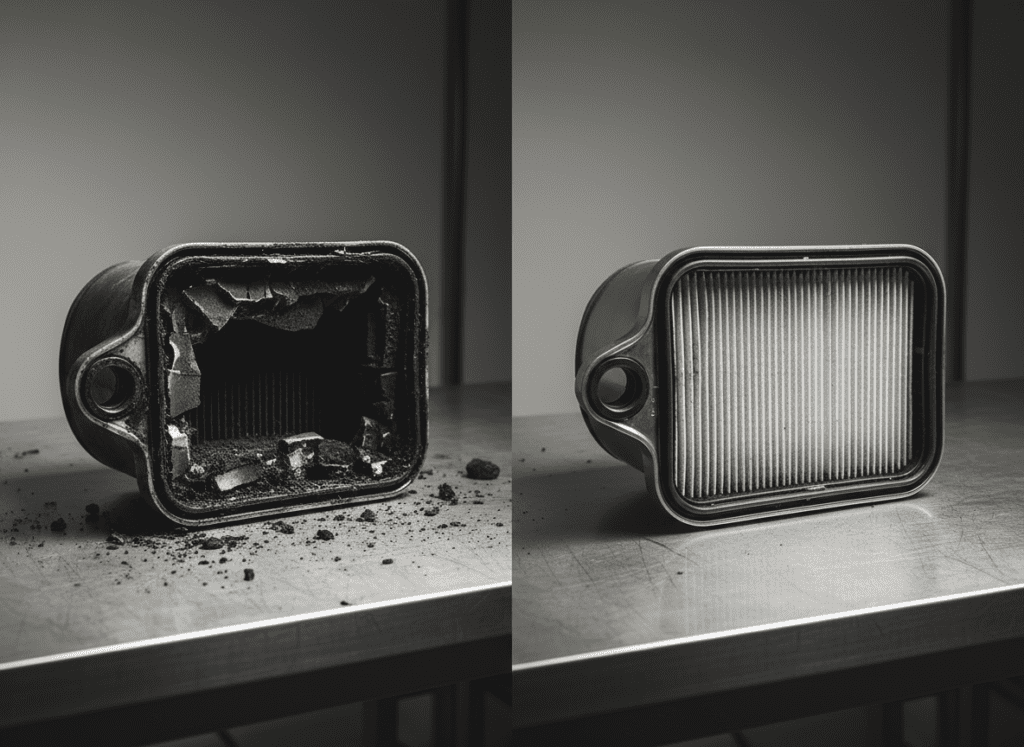
The DPF can be physically removed from the exhaust system and either replaced with a straight-pipe section or “gutted” — where the internal ceramic substrate is drilled or knocked out while the outer casing is left in place to maintain the appearance of a complete exhaust.
Gutting is particularly common because it makes the modification less immediately obvious to a visual inspection. However, a proper exhaust emissions or smoke test during an MOT will still identify the missing filtration function.
ECU Remapping to Remove DPF Monitoring
Removing the physical filter alone will trigger constant fault codes and warning lights, because the engine management system monitors the DPF through pressure sensors and temperature data. A DPF delete also requires an ECU remap that removes the DPF monitoring function from the software, suppressing the fault codes.
After both interventions, the dashboard is clear and the vehicle appears to operate normally. But the filter — and its legal, MOT, and insurance implications — has been permanently removed.
Important: A DPF delete is irreversible without significant expense. The physical components are removed and the ECU software is altered. Restoring a vehicle to a compliant state after a delete typically costs as much or more than the original repair would have.
The Legal Position on DPF Removal in the UK
DPF removal for vehicles used on public roads is illegal under UK Road Traffic and Construction and Use Regulations. Specifically, it is an offence to use a vehicle on a public road if it has been modified in a way that causes it to no longer meet the emissions standards it was originally type-approved to.
The Law for Drivers
If you drive a vehicle with a removed or bypassed DPF on a public road, you are committing a road traffic offence. Penalties can include:
- An on-the-spot fine
- A Vehicle Defect Notice requiring the vehicle to be taken off the road
- A prohibition notice preventing use of the vehicle until it is returned to a compliant state
The Law for Garages and Tuners
A garage or tuning company that carries out a DPF delete on a vehicle intended for road use is also acting illegally. However, enforcement primarily targets the vehicle owner — you are responsible for the condition of the vehicle you drive on public roads, regardless of who carried out the modification.
Off-road vehicles are different: DPF removal for vehicles used exclusively off public roads — competition vehicles, some agricultural applications — is a separate matter. This guide covers road-going passenger vehicles and commercial vans.
The Real Risks of a DPF Delete
Beyond the immediate legal position, a DPF delete carries several practical risks that are worth understanding clearly before making any decision.
Health and Environmental Impact
The DPF exists specifically to reduce fine particulate emissions from diesel combustion. Without the filter, your vehicle emits significantly more fine particles directly into the air. These particles are associated with respiratory health problems. The filter is not optional equipment — it is part of why modern diesel vehicles are permitted on UK roads at all.
Resale Value
A vehicle with a deleted DPF is legally non-compliant for road use. Selling it privately or to a dealer without disclosing this modification exposes you to significant legal risk. Dealers will typically refuse a vehicle with a known DPF delete or will significantly reduce the price to account for the cost of restoration.
If you disclose the modification, most private buyers will discount heavily or simply walk away. The modification that seemed to save money in the short term can represent a substantial loss at the point of sale.
Manufacturer Warranty Implications
For newer vehicles still under manufacturer warranty, any modification to the emissions system is virtually certain to void the warranty. Any subsequent engine or emissions-related repair will need to be paid for in full — and costs can be significant.
DPF Removal and MOT Failure
Since February 2014, MOT testers in the UK have been required to check for DPF removal as part of the visual inspection. A vehicle where the DPF has been removed will receive an automatic MOT failure.
How MOT Testers Detect DPF Removal
MOT testers check for DPF removal through a combination of visual inspection and smoke opacity testing. Specific checks include:
- Visual inspection of the exhaust system for the expected DPF location and housing
- Emission smoke testing — vehicles without a functioning DPF typically produce measurably higher particulate output
- In some cases, inspection of the underside for evidence of recent exhaust modification
Vehicles where the DPF has been “gutted” — with the outer casing left in place — can sometimes pass a visual inspection but will often still fail on smoke opacity. Modern MOT equipment has become increasingly sensitive to this kind of modification.
No MOT, no insurance: Driving without a valid MOT automatically invalidates most motor insurance policies. A vehicle that fails its MOT due to DPF removal cannot legally be driven on a public road until the fault is rectified — which means either a costly restoration or the vehicle being taken off the road.
What DPF Removal Means for Your Insurance
Vehicle insurance policies in the UK require you to disclose material modifications to your vehicle. A DPF removal is a material modification — it changes the vehicle’s emissions profile and legal road-use status.
Most standard insurance policies include a condition that the vehicle must be maintained in a roadworthy and legally compliant condition. A vehicle with an illegal DPF modification fails this condition.
Practical Insurance Consequences
- If you have a DPF delete and do not disclose it to your insurer, your policy may be voided — meaning any claim you make could be rejected, regardless of whether the DPF modification was a contributing factor.
- If you disclose it, many insurers will simply decline to cover the vehicle or charge a significantly higher premium.
- In the event of an accident, a third party’s legal team may investigate the vehicle’s compliance status. A known non-compliance can significantly complicate any claims or legal proceedings.
These are not theoretical risks. They are well-documented consequences that affect a real number of drivers who have had DPF deletes carried out and subsequently faced insurance or legal complications.
How Professional DPF Cleaning Compares
The reason DPF deletes are marketed at all is that they are presented as a permanent solution to a recurring problem. The honest answer is that professional DPF cleaning is a genuine permanent solution in the majority of cases — without any of the legal, insurance, or resale consequences.
| DPF Delete | Professional DPF Cleaning | |
|---|---|---|
| Legal for road use | No | Yes |
| MOT compliant | No — automatic failure | Yes |
| Insurance implications | Policy likely voided | None |
| Resale value impact | Significant reduction | None |
| Environmental compliance | Non-compliant | Fully compliant |
| Reversible | Very difficult and expensive | N/A — filter retained |
| Effectiveness | Eliminates warnings permanently | Restores filter to full function |
Professional DPF cleaning restores your filter to a serviceable condition. For soot-blocked filters, this typically means a forced regeneration. For more heavily loaded filters with ash accumulation, off-car deep cleaning is required. In both cases, the filter remains in place, the vehicle remains legally compliant, and the MOT remains achievable.
When Professional DPF Cleaning Solves the Problem Completely
The vast majority of DPF problems in everyday passenger diesels and commercial vans are caused by one of three things: soot accumulation from short-journey driving, failed regeneration cycles, or a combination of both with accumulated ash. All three are resolvable without removing the filter.
What a Specialist Can Do That Keeps the Filter Intact
- Forced regeneration: Using specialist equipment to trigger a high-temperature burn-off cycle that clears soot loading. Fast, effective, and keeps the filter in place.
- On-car chemical cleaning: Specialist cleaning agents introduced to the filter while in situ. Useful for moderate soot and early ash accumulation.
- Off-car deep cleaning: The filter is removed and subjected to thorough professional cleaning to remove ash deposits that cannot be burned away. The filter is then reinstalled and the system returned to full function.
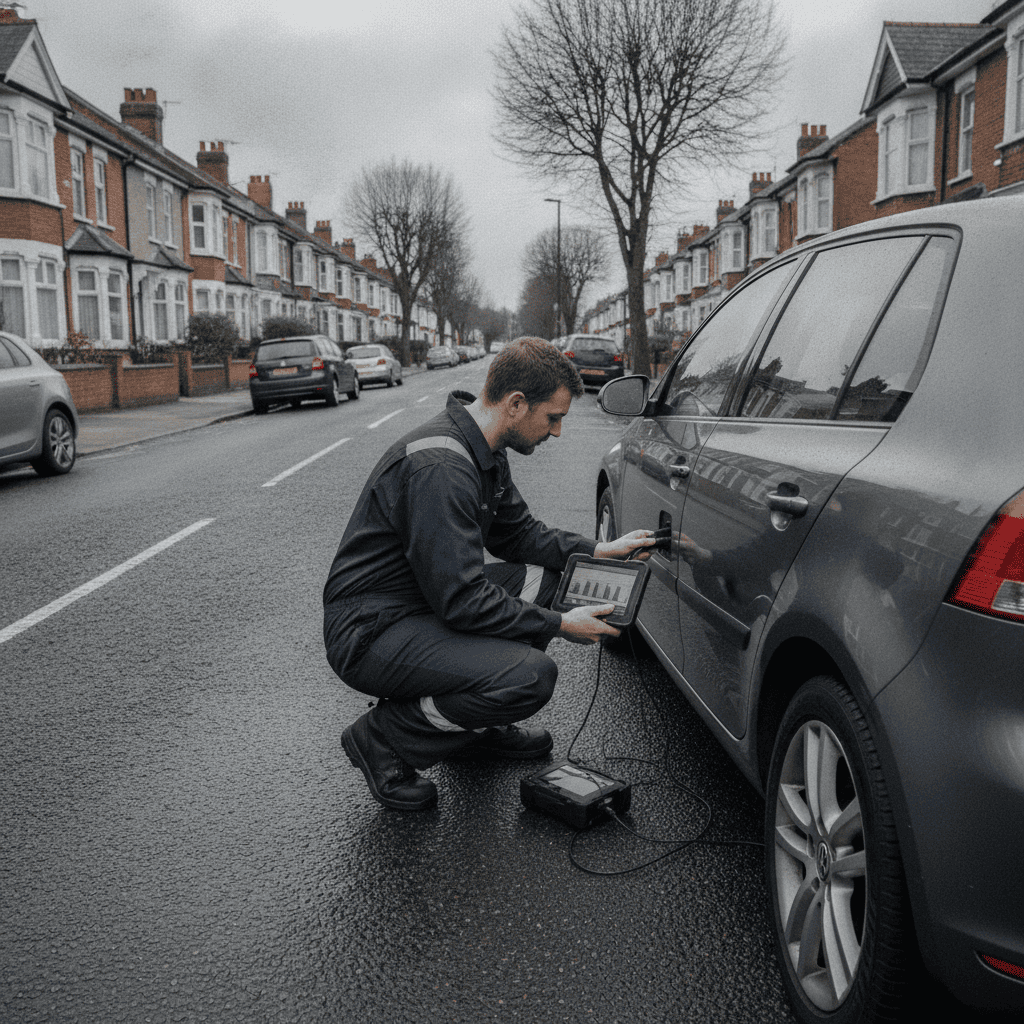
DPF Clean Specialist carries out all of these services as part of a mobile West Midlands operation. Every job starts with a free diagnostic check using live data — so you know exactly what the filter condition is before any work begins.
In over 10 years of diesel diagnostics experience, the overwhelming majority of DPF warning lights and blocked filter cases are resolvable through cleaning — without any need to consider removal.
Save up to 70% vs replacement: Professional DPF cleaning costs a fraction of a replacement filter. Combined with the avoided legal, insurance, and resale costs of a delete, there is almost no scenario where a DPF delete makes financial sense for a road-going vehicle.
Need Your DPF Sorted the Right Way?
Mobile diagnostics and DPF cleaning across the West Midlands. We come to you — free diagnostics before any work begins, transparent pricing throughout.
Frequently Asked Questions
Is a DPF delete legal in the UK?
No. DPF removal or bypass on a vehicle used on public roads is illegal under UK Road Traffic and Construction and Use Regulations. It also results in automatic MOT failure and can void your vehicle insurance. It is only legal on vehicles used exclusively off public roads.
Will a DPF delete fail an MOT?
Yes. MOT testers have been required to check for DPF removal since February 2014. A vehicle with a missing or gutted DPF will receive an automatic MOT failure. Without a valid MOT, the vehicle cannot legally be driven on a public road.
Can a blocked DPF be fixed without removal?
In the majority of cases, yes. Forced regeneration, on-car chemical cleaning, and off-car deep cleaning are all options that restore the filter to working condition without removing it from the vehicle. A proper diagnostic check is the starting point for determining which approach is appropriate.
How do I know if my DPF has been deleted by a previous owner?
A professional diagnostic check can identify a deleted DPF through live pressure data — a missing filter will show zero or implausible differential pressure readings regardless of engine speed. Physical inspection of the exhaust system and ECU data can also confirm whether the filter is present and functioning.
Can a DPF delete be reversed?
Yes, but it is costly. Reversing a DPF delete requires sourcing and fitting a replacement DPF, restoring the exhaust system, and returning the ECU to its original software. The total cost of restoration is typically higher than the original repair would have been. Prevention — through proper cleaning before the situation becomes critical — is almost always the better approach.