When a DPF warning light appears, the instinct is to call your regular garage. That seems reasonable. But DPF problems are not routine faults. The difference between a specialist and a general mechanic can mean the difference between a clean filter and an unnecessary replacement costing over £1,500.
This guide explains what separates a DPF specialist from a standard garage — and what to look for before you book any DPF work.
Contents
Not sure what’s wrong with your DPF?
DPF Clean Specialist offers free diagnostics before any cleaning or repair work is carried out. You will know exactly what the problem is before spending a penny. Find out how free diagnostics works.
Why Choosing the Right Service Matters
The diesel particulate filter is one of the most misunderstood components on a modern diesel vehicle. It sits in the exhaust system, trapping soot and particulate matter before it escapes into the atmosphere. Over time, it fills up. Under normal driving conditions, the filter cleans itself through a process called regeneration. When regeneration fails — or fails repeatedly — the filter blocks.
A blocked DPF produces a range of symptoms: warning lights, reduced performance, limp mode, increased fuel consumption, and in some cases, white smoke from the exhaust. These symptoms can look similar to other faults. Without the right diagnostic equipment and experience, it is easy to misread what is happening.
That is where the gap between a specialist and a general mechanic becomes significant. A standard garage may have the goodwill and basic equipment to try. But DPF problems require specific knowledge, specialist tools, and an understanding of regeneration cycles that most general mechanics simply do not have.
What Standard Garages Typically Do With DPF Faults
This is not a criticism of general mechanics. Most do excellent work across a wide range of vehicle systems. But DPF faults sit outside the everyday scope of routine garage work, and the typical response reflects that.
Clearing the fault code
Many garages plug in an OBD reader, identify the DPF-related fault code, and clear it. The car drives away and the light returns within days or weeks. The underlying blockage has not been addressed — the code has simply been reset.
Recommending a forced regeneration
Forced regeneration is a legitimate process. It uses software to raise exhaust temperatures and burn off accumulated soot. But it only works if the filter is not too blocked to regenerate. A filter above a certain soot loading level will not respond. Recommending forced regeneration on a heavily blocked DPF can waste time and money, and risks further damage if the underlying cause of the blockage is not addressed first.
Recommending replacement
When a DPF fault persists, many garages recommend a full replacement. In some cases that is the right call. But replacement is expensive — often £1,000 to £2,500 including parts and labour — and it is frequently unnecessary. A DPF that can be professionally cleaned is often misdiagnosed as beyond saving, simply because the garage does not have the equipment or experience to clean it properly.
Using a chemical additive
Over-the-counter DPF additives and cleaning products can help with mild cases. They are unlikely to resolve a significant blockage. When they fail, some garages are unsure what to do next, and the customer ends up being referred elsewhere anyway — having already spent money on a product that did not work.
What a DPF Specialist Does Differently
A genuine DPF specialist approaches the problem from a different starting point. The goal is not to treat the symptom — it is to understand what caused the blockage and what the right remedy is for this specific vehicle, at this specific level of restriction.
Specialist diagnostic equipment
Accurate DPF diagnosis requires more than a basic OBD reader. A specialist uses pressure differential testing to measure actual restriction levels inside the filter, compares readings against manufacturer specifications, and checks live data from the DPF pressure sensor to understand what the filter has been experiencing during normal driving. This gives a much clearer picture of what is happening and why.
Understanding regeneration history
A blocked DPF rarely appears without warning. Regeneration failures build up over time. A specialist can review the vehicle’s regeneration history through live data — understanding how many regenerations have been attempted, how successful they were, and whether there is an underlying issue driving repeated failure. Fixing a DPF without identifying why it blocked in the first place means it will block again.
Targeted cleaning processes
When a filter genuinely needs cleaning, a specialist has the right equipment to do it properly. Professional DPF cleaning uses a combination of specialist chemicals, controlled heat cycling, and in some cases, pressure flushing — approaches that are simply not available in a standard workshop. The goal is to restore the filter to working efficiency, not just to get the warning light off temporarily.
Mobile capability and convenience
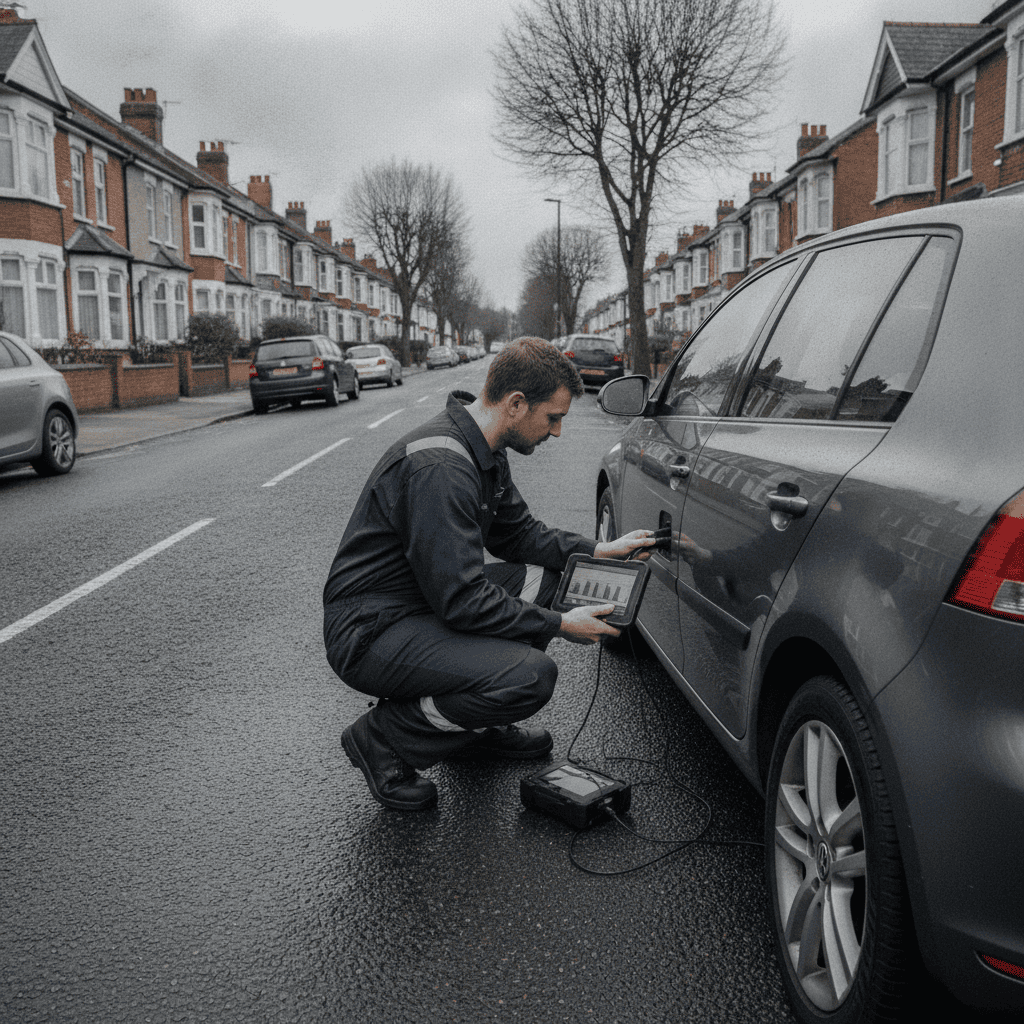
Many DPF specialists, including DPF Clean Specialist, can attend the vehicle at your location. This is particularly valuable when a vehicle is in limp mode or it is not safe to drive it to a workshop. Rather than the vehicle being transported at further cost and risk, the specialist comes to you — carrying the same diagnostic and cleaning equipment they would use in a fixed workshop.
Specialist vs Standard Garage: A Quick Comparison
| Area | Standard Garage | DPF Specialist |
|---|---|---|
| Diagnostic depth | OBD fault code reading | Pressure testing, live data, regeneration history |
| Regeneration assessment | May attempt without checking soot loading | Checks whether regeneration is viable first |
| Cleaning options | Chemical additives, basic flush | Specialist chemical cleaning, pressure flushing, heat cycling |
| Root cause analysis | Often limited | Identifies why the DPF blocked to prevent recurrence |
| Replacement recommendation | May be premature | Only recommended when cleaning cannot restore function |
| Mobile attendance | Usually not available | Available — comes to the vehicle |
Questions to Ask Before You Book DPF Work
Before committing to any garage or specialist for DPF work, it is worth asking a few direct questions. The answers will tell you quickly whether you are dealing with someone who understands the system properly.
- Do you carry out DPF pressure differential testing? A yes is a good sign. It means they assess actual restriction levels, not just fault codes.
- Can you check the vehicle’s regeneration history? This requires live data software. If the answer is no, they may be working without the full picture.
- What is your cleaning process? Vague answers or mentions of off-the-shelf additives suggest limited specialist capability.
- Will you identify why the DPF blocked? This is the key question. Without understanding the cause, any cleaning is a temporary fix.
- Do you offer diagnostics before recommending work? Any credible specialist will diagnose before committing to a course of action.
A DPF that has blocked once is more likely to block again if the underlying cause — whether that is short journey driving, a faulty injector, an EGR issue, or something else — is not identified and addressed. A specialist diagnosis should always include a review of why the blockage occurred.
How a Wrong Diagnosis Can Cost You More
The most expensive outcome in any DPF situation is not the cost of specialist cleaning — it is the cost of unnecessary replacement following repeated failed attempts at cheaper fixes.
A pattern that comes up regularly looks something like this. A warning light appears. A garage clears the code. The light returns. A forced regeneration is attempted and fails. An additive is tried. The light comes back again. Eventually the garage recommends replacement. The driver spends £1,500 to £2,500 on a new filter — which then blocks again within months because the original cause was never identified.
Specialist diagnosis at the outset — including pressure testing, root cause analysis, and a professional cleaning where appropriate — is almost always cheaper than this chain of events. It is also more reliable, because the outcome is based on accurate information rather than guesswork.
This is not a hypothetical. It is the reality for a significant number of diesel drivers who contact DPF Clean Specialist after working through other options first.
How DPF Clean Specialist Approaches Every Job
DPF Clean Specialist is based in the West Midlands and works across Birmingham, Wolverhampton, Walsall, Lichfield, Cannock, Sutton Coldfield, and the surrounding area. Every job follows the same starting point: an honest diagnostic check before any work is carried out.
Free diagnostics means exactly that. Before any cleaning or repair is agreed, the vehicle is assessed using specialist equipment. You will know what the actual problem is — the soot loading, the regeneration history, the condition of the filter — before a decision about next steps is made. There is no pressure to commit to cleaning or any other work until you understand what you are dealing with.
Where cleaning is the right option, the process is carried out using professional specialist equipment. Where cleaning cannot resolve the problem, that is explained clearly with the evidence to support it. The goal is always the most cost-effective solution for the vehicle, not the most profitable one for the business.
Mobile attendance is available across the service area, meaning the specialist can come to the vehicle at your home, workplace, or wherever it is located — including vehicles stuck in limp mode. The same standard of diagnosis and service applies whether the work is carried out on site or at a fixed location.
If you are looking for a DPF specialist in the West Midlands, start with a free diagnostic. It costs nothing and gives you the information you need to make the right decision about your vehicle.
Get a Free DPF Diagnostic — No Obligation
Find out exactly what is wrong before spending anything. DPF Clean Specialist provides free diagnostics across Birmingham, Wolverhampton, Walsall, and the West Midlands.
Frequently Asked Questions
Can a standard garage clean a DPF?
Some garages have basic DPF cleaning capability, but professional specialist cleaning uses equipment and processes that are not standard in a general workshop. Pressure differential testing, heat cycling, and specialist chemical flushing require dedicated equipment and training. If a garage offers only an additive or a basic code reset, that is unlikely to resolve a significant blockage.
How do I know if my DPF needs cleaning or replacing?
This can only be determined accurately through pressure testing and a proper assessment of the filter’s condition. A DPF that is significantly blocked but structurally intact can often be cleaned. A DPF that has been damaged — through excessive heat, physical impact, or prolonged neglect — may need replacement. A specialist will be able to tell you which applies after a diagnostic check.
Is DPF replacement always necessary when a garage recommends it?
Not always. Replacement is sometimes recommended because the garage does not have the equipment to clean the filter properly, or because a cleaning attempt failed that was not appropriate for the level of blockage. Getting a second opinion from a DPF specialist — including a pressure test — is worthwhile before committing to a replacement.
Will a cleaned DPF last as long as a new one?
A professionally cleaned DPF that has been restored to near-normal flow efficiency should perform well and last many miles, provided the root cause of the blockage is also addressed. If the underlying cause — such as short journey driving, an EGR fault, or an injector issue — is not resolved, the filter is likely to block again regardless of whether it is cleaned or replaced.
What areas does DPF Clean Specialist cover?
DPF Clean Specialist covers the West Midlands, including Birmingham, Wolverhampton, Walsall, Lichfield, Cannock, Sutton Coldfield, Dudley, Oldbury, and surrounding areas. Mobile attendance is available, meaning the specialist can come to the vehicle rather than requiring the driver to bring it in.